EN
 English
 Português


Industry News
OEM vs. Aftermarket C.V. Joints: Why Quality Control Matters in Replacements
Content
Every driveline repair eventually asks the same question: should the replacement C.V. joint be original equipment or aftermarket? The price gap is obvious, but the engineering gap is not. The true dividing line between a durable repair and a premature failure is rarely the brand: it is the quality control that happens before the part is boxed. This guide compares OEM and aftermarket C.V. joints and explains why quality control matters more than the label.
Understanding C.V. Joints and Their Failure Modes
Constant velocity joints transfer engine torque to the driven wheels while allowing the suspension to move and the front wheels to steer. An outer, or fixed, C.V. joint sits at the wheel end and handles large deflection angles under full load. An inner, or plunging, C.V. joint sits at the transmission or differential end and accommodates the changes in shaft length as the suspension compresses. Together with an axle shaft, these joints form the half-shaft assembly that keeps power delivery smooth.
The two joint designs work under very different conditions, so distinguishing them helps during diagnosis. For a closer look, read our technical comparison of what separates an inner C.V. joint from an outer one.
Common Failure Modes
C.V. joints usually fail in predictable ways:
- Boot damage: a torn or cracked boot lets grease escape and admits water, salt and grit, quickly destroying the balls and raceways.
- Lubrication breakdown: a joint running low on grease suffers metal-to-metal contact and rapid wear.
- Fatigue fractures: substandard steel or inconsistent heat treatment allows cracks to start under repeated torque shock.
- NVH problems: geometry errors or an unbalanced shaft cause vibration, humming or clicking during turns.
Both OEM and aftermarket joints can fail this way; the probability is set by manufacturing quality, not by the sales channel.
OEM vs. Aftermarket C.V. Joints: Core Differences
OEM parts are made to the vehicle builder's specification and are typically sold through dealer networks. Aftermarket parts are made by independent suppliers and range from components that closely match original designs to low-cost commodity products. The table below summarizes the attributes that usually differ.
| Attribute | OEM C.V. Joint | Ordinary Aftermarket | Quality-Controlled Aftermarket |
|---|---|---|---|
| Steel grade | Specified and verified | Often unverified | Certified and tested |
| Heat treatment | Full metallurgical control | Usually unspecified | Monitored hardness and case depth |
| Raceway machining | OEM tolerances | Wide tolerance band | Precision-ground and gauged |
| Balancing | Factory balanced | Frequently skipped | Dynamic balance checked |
| Grease fill | Correct volume and type | Sometimes insufficient | Metered fill of extreme-pressure grease |
| Boot and seal | OE-grade material | Basic rubber | Reinforced rubber or polyurethane |
| Fitment verification | Validated on vehicle | Limited | Dimensional records and trial fits |
| Typical price | High | Low to medium | Medium |
Quality-controlled aftermarket factories work with the same engineering intent as OEM suppliers: correct steel, controlled heat treatment, tight raceway tolerances, proper lubrication and final inspection before the part ships.
Why Quality Control Matters More Than the Label
Aftermarket is not a quality rating. The category includes precision manufacturers and bare workshops alike. What separates one C.V. joint from another is the control system around every production step.
Steel Quality and Heat Treatment
The steel in a C.V. joint must resist pitting, spalling and impact fracture. OEM specifications define the grade, hardenability and case depth. A quality aftermarket factory follows equivalent metallurgical standards; a low-cost operation may accept whatever steel is available. Two joints can look the same, yet the one with shallow case hardening can fail in a fraction of the intended service life. This is why heavy-duty and impact-resistant inner C.V. joints are made from certified steel with monitored heat treatment.
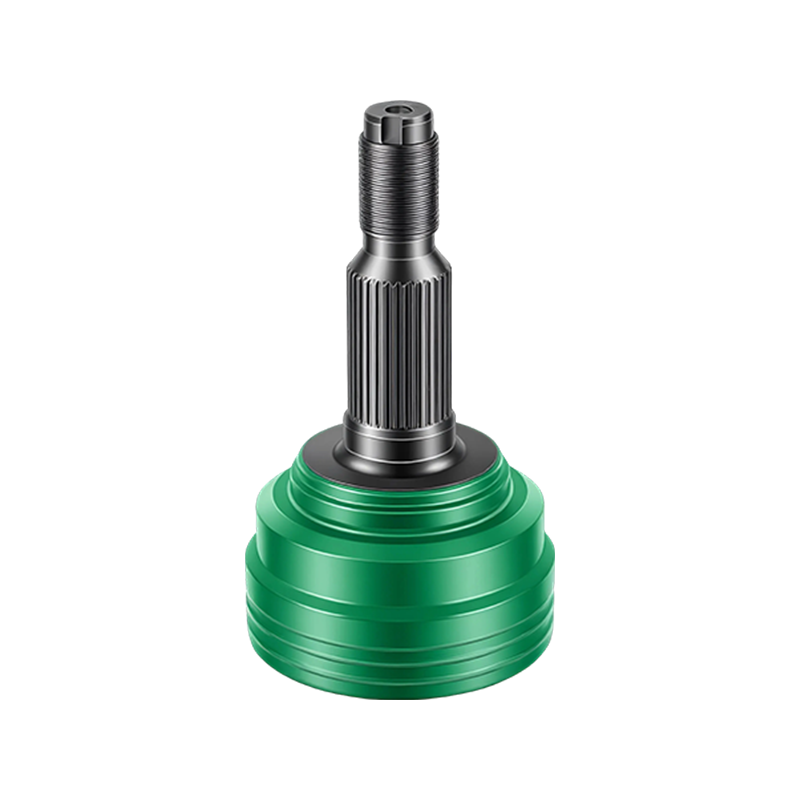
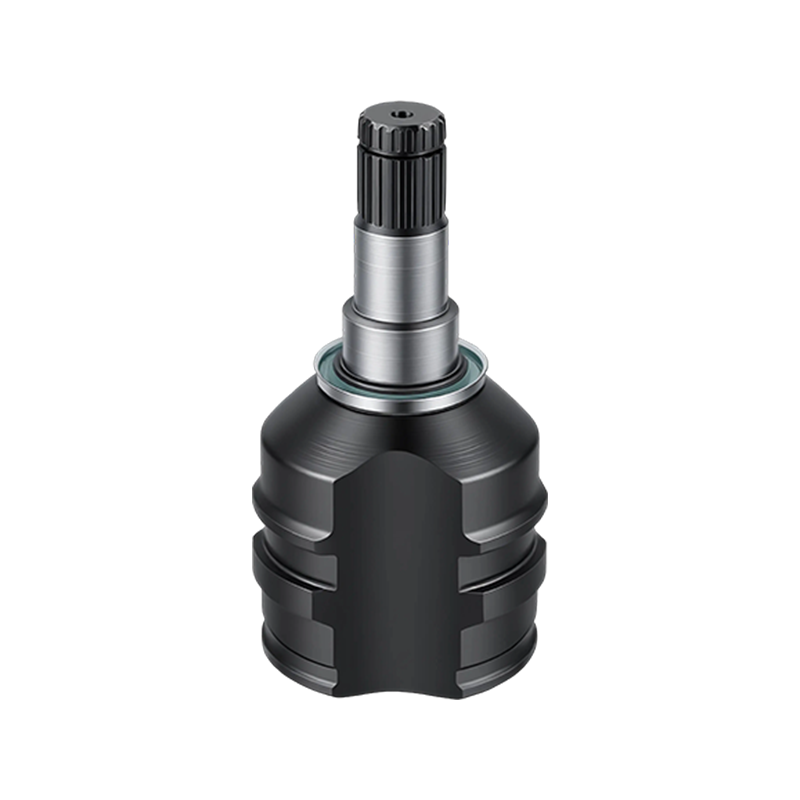 Heavy-Duty Impact-Resistant Inner CV Joint 43040-32040This inner CV joint uses certified forged alloy steel with deep induction hardening to resist pitting and spalling. Its precision-ground raceways maintain accurate geometry, reducing friction and preventing stress concentration under heavy loads.View Product →
Raceway Machining and Joint Geometry
Raceways and ball grooves determine how smoothly the joint articulates and how evenly the load is distributed. Small geometry errors concentrate stress on a few contact points, raising friction and accelerating spalling. Precision grinding, regular gauging and dimensional records keep the geometry inside specification.
Balancing and Vibration Control
At highway speed a drive shaft rotates dozens of times per second, and any imbalance creates noticeable vibration. Some aftermarket axles are machined from solid bar instead of hollow tubing; the extra weight raises rotational inertia and makes balancing even more important. A well-controlled replacement axle is checked for runout and balanced before packing.
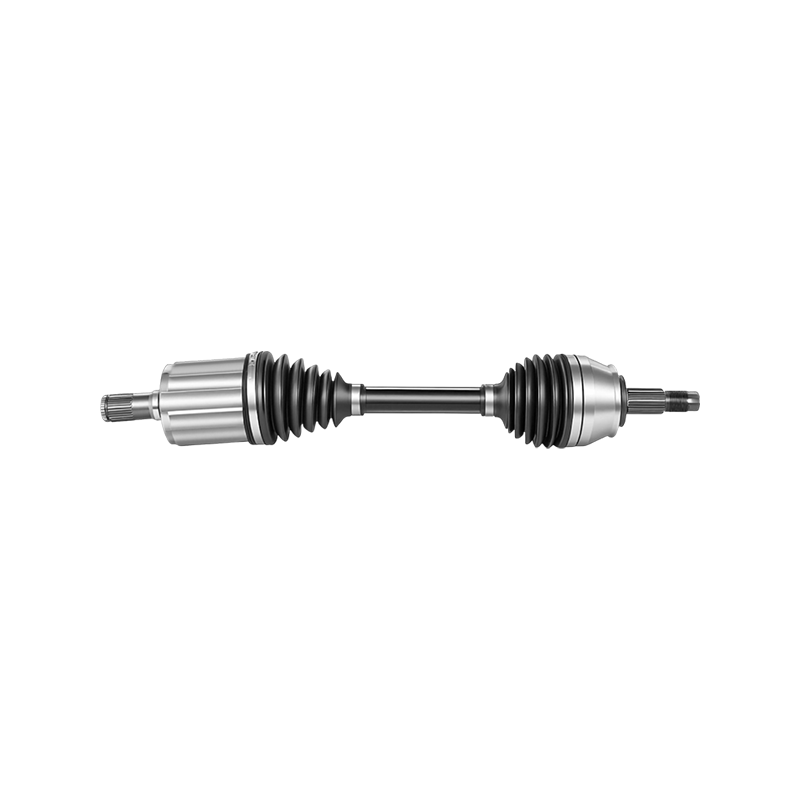
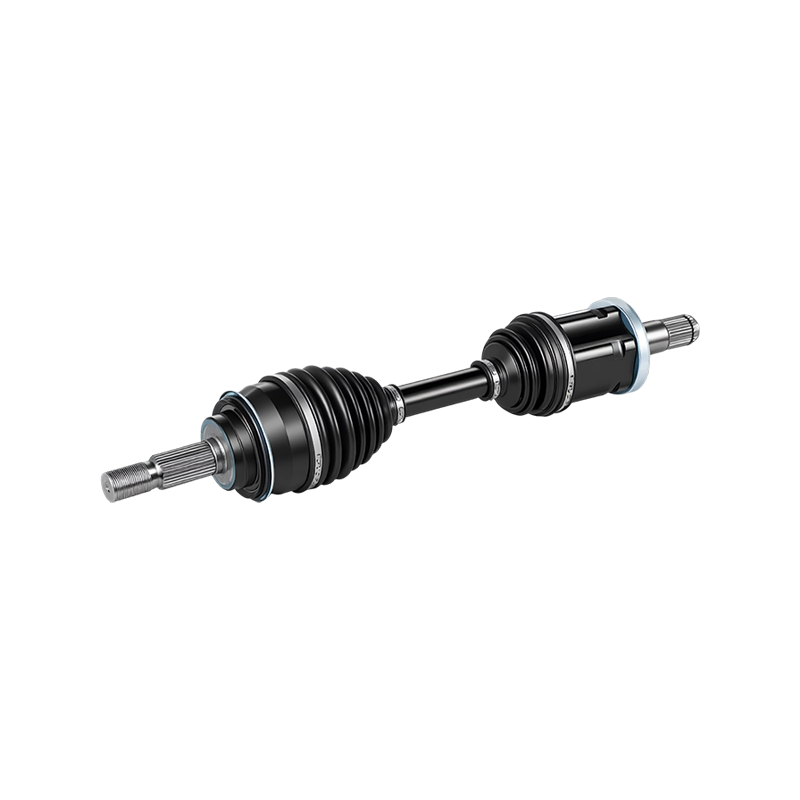
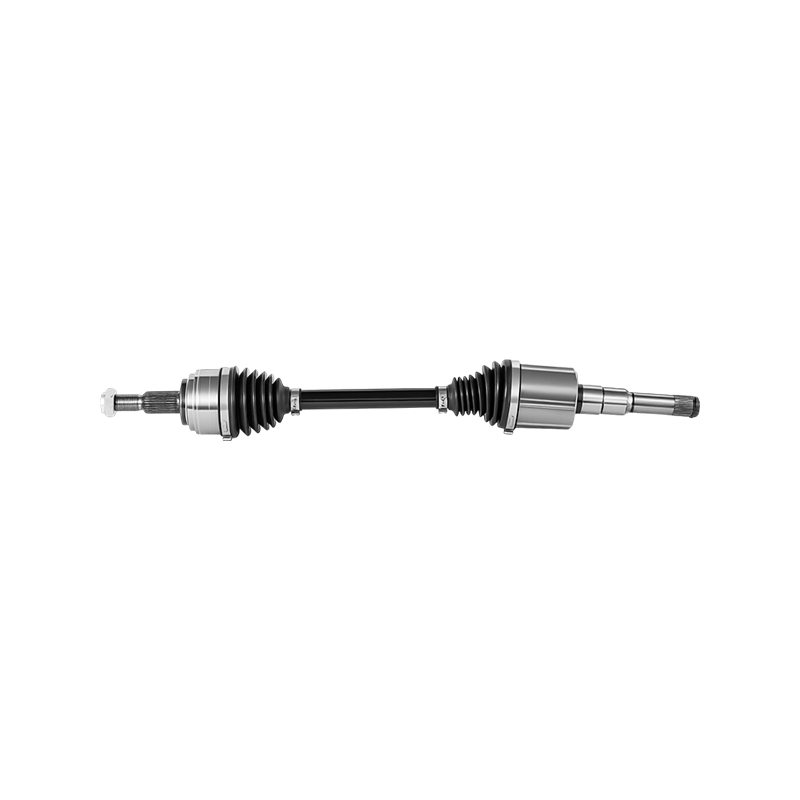
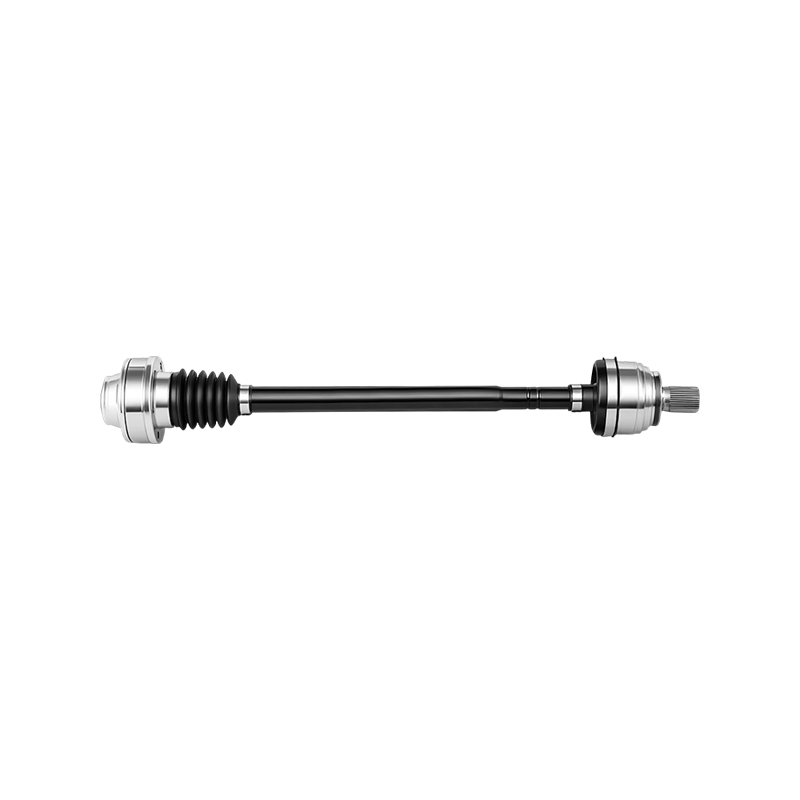
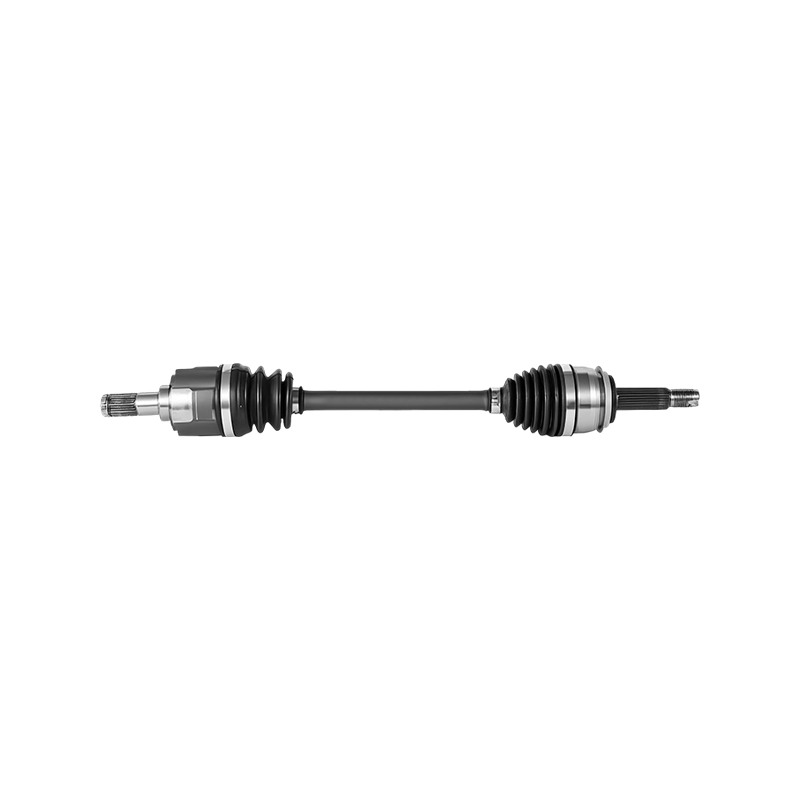 Replacement Front-Wheel CV Axle Drive Shaft 49501-1R010This integrated half-shaft assembly is balanced and checked for runout before packing, helping avoid vibration at highway speeds. Its anti-rust treatment and precision CV joints support reliable power transfer during steering and suspension movement.View Product →
Grease, Boots and Sealing
C.V. joint grease contains extreme-pressure additives and must be filled in the right volume; the boot must stay flexible at low temperature and resist ozone and abrasion. Cheap aftermarket boots often harden and tear within a year, while quality aftermarket kits use reinforced rubber or polyurethane, correct clamps and a metered grease fill.
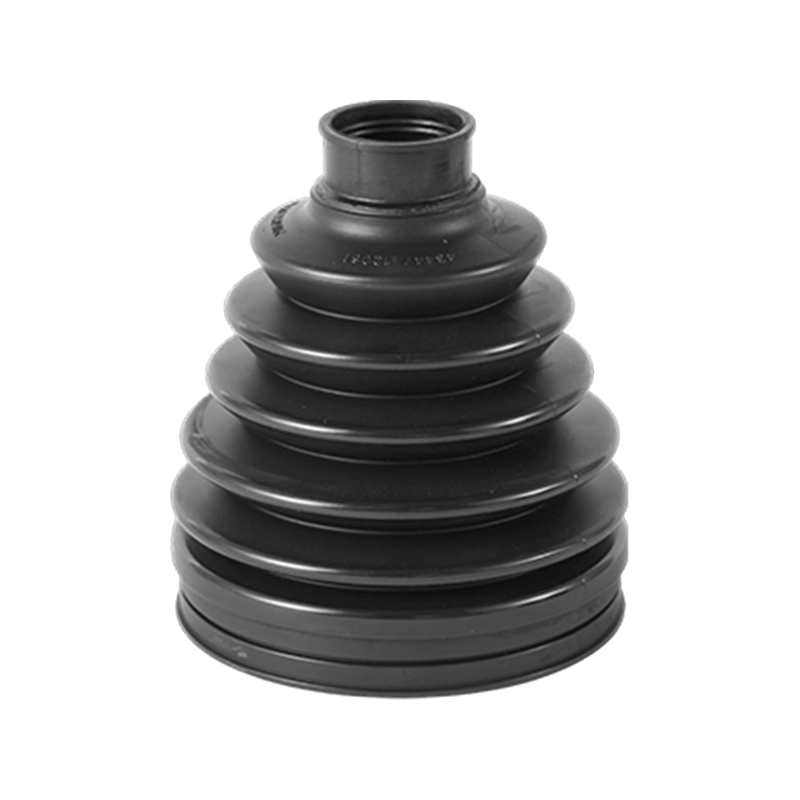 Anti-Leak CV Boot Cover 04427-0K020This rubber bellows cover keeps grease sealed inside the joint while blocking mud, water and debris. Its flexible pleated design accommodates driveshaft angle changes, and the durable composite material resists aging and tearing in harsh conditions.View Product →
Process Control and Traceability
Quality control also lives in the paperwork. Can the manufacturer trace a finished joint back to a steel heat? Are there inspection checkpoints after forging, machining and heat treatment? Is runout measured before boxing? Suppliers that document these steps are far more predictable. Buyers can verify this by reviewing the actual production environment; Bayzo, for example, operates a dedicated C.V. joint factory and invites customers to inspect its factory floor and inspection procedures.
How to Evaluate an Aftermarket C.V. Joint Supplier
Choosing an aftermarket C.V. joint is really choosing a supplier's quality system. Use this checklist to separate a controlled product from a blind gamble:
- Confirm you are dealing with the factory, not an unnamed trading company.
- Ask for material certificates and heat-treatment records.
- Inspect the joint's surface finish; regular grinding marks indicate a controlled process.
- Check the boot: it should be flexible, thick-walled and fitted with a proper clamp.
- Ask whether axle assemblies are balanced and how runout is verified.
- Review the warranty and the speed of technical support.
A supplier that cannot provide this basic information is a risk, no matter how attractive the price.
OEM or Aftermarket: Which Do You Choose?
Choose OEM when the vehicle is under warranty, when the original part number is mandatory, or when no aftermarket manufacturer can document equivalent quality. Choose a quality-controlled aftermarket joint when OEM parts are expensive or slow to source, or when the original design has a known weakness. In both cases, compare the total cost over the intended service life rather than the invoice price. A part that lasts twice as long justifies a higher price.
Frequently Asked Questions
Q1: Is aftermarket C.V. joint quality as good as OEM?
Quality varies widely. Premium aftermarket factories apply metallurgical control, precision machining, balancing and final inspection comparable to OEM. Low-cost parts often skip those steps. Ask the supplier to document its quality control before comparing prices.
Q2: What causes early failure of aftermarket C.V. joints?
Most early failures come from three gaps: a boot that cracks and admits contamination, steel or heat treatment that cannot handle torque shock, and missing balance checks that cause vibration. These are quality-control failures, not proof that aftermarket parts are inherently bad.
Q3: How do I verify the quality control of an aftermarket joint?
Check the supplier's factory records, request material and heat-treatment reports, inspect the raceway finish, confirm the boot material and ask whether assemblies are balanced before packing. Good suppliers normally provide this information.
Q4: Should I replace C.V. joints in pairs?
Replace in pairs when the vehicle has high mileage or the opposite side shows similar wear. If only one side has failed and the other is clean, a single replacement is acceptable provided the new part matches the specification and quality.
The OEM versus aftermarket debate comes down to one word: control. OEM parts inherit the vehicle maker's specification; aftermarket parts carry only the quality that their manufacturers put into them. When steel, heat treatment, machining, grease, boot and balancing are all controlled, an aftermarket C.V. joint delivers OEM-level reliability at a better price. When those steps are skipped, even the cheapest part is too expensive.
- Email: zyqya@qq.com
- Tel: +86-576-87209702
- Mob: +86-13906546241
- Sales Tel: +86-15098852690/19861808468
- Whatsapp: +86-13656869496
- Add: No. 9 Xingyuan Road, Farm Automobile and Motorcycle Park, Yuhuan City, Zhejiang Province, China
Copyright © Yuhuan Bayzo Machinery Co., Ltd. All Rights Reserved.
OEM/ODM Drivetrain Components Suppliers