EN
 English
 Português


Industry News
Inner vs. Outer C.V. Joints: How Their Functions and Failure Symptoms Differ
Content
- 1 What Are Inner and Outer C.V. Joints?
- 2 Inner C.V. Joint: Function and Design
- 3 Outer C.V. Joint: Function and Design
- 4 Key Differences Between Inner and Outer C.V. Joints
- 5 Inner vs. Outer C.V. Joint Failure Symptoms
- 6 How to Diagnose Which Joint Is Failing
- 7 Replacement Strategy: Joint or Complete Axle Assembly?
- 8 Choosing a Reliable Replacement Supplier
- 9 Frequently Asked Questions
- 10 Conclusion
Every front-wheel-drive vehicle has two constant velocity (C.V.) joints on each drive axle: one at the wheel and one at the transmission. They look similar, but the inner and outer joints perform different jobs and fail with different symptoms. Knowing which one you face is the first step toward a correct diagnosis.
What Are Inner and Outer C.V. Joints?
An automotive drive axle is a complete power-delivery system. The inner C.V. joint sits at the transmission side of the axle, and the outer C.V. joint sits at the wheel hub. Together they connect the gearbox to the driven wheel while allowing the suspension to move and the front wheels to steer.
The term "constant velocity" means output speed stays steady even when the joint operates at an angle. Both joints transfer torque smoothly, but each manages a different movement, and that difference is key to diagnosing failure.
Inner C.V. Joint: Function and Design
The inner C.V. joint is the plunging joint. Its main job is to let the drive axle grow shorter and longer as the suspension compresses and extends. When the wheel moves upward, the distance between the hub and the transmission changes; the inner joint absorbs that change by telescoping along the shaft.
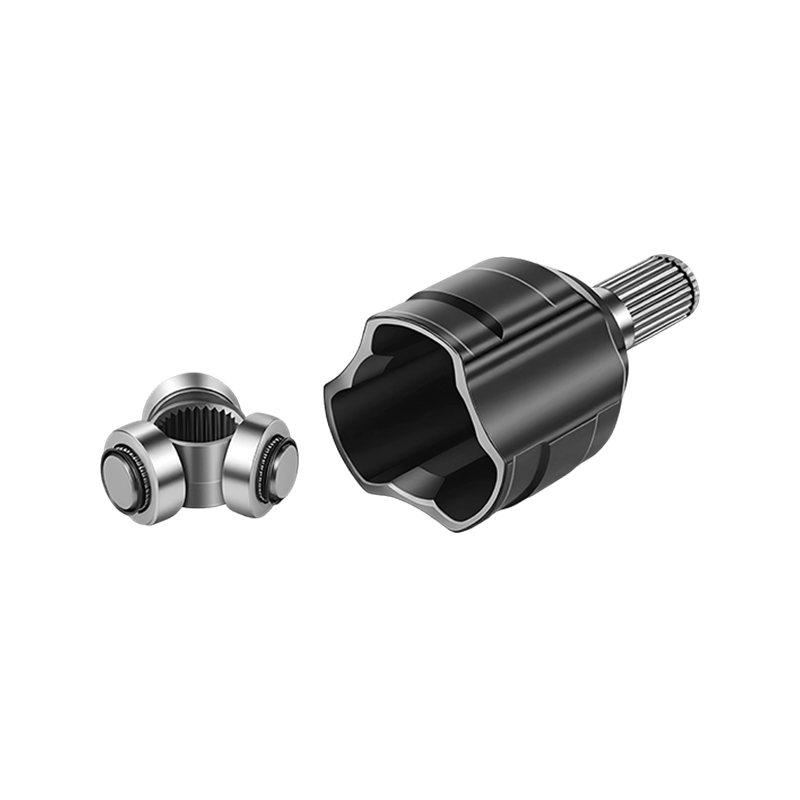
Inner joints are usually tripod or double-offset designs. A tripod-style joint uses three rollers sliding inside a housing, giving excellent axial movement capacity. Because of this sliding action, the inner joint runs at a shallower angle than the outer joint but sees more continuous sliding friction.
For demanding applications, inner joints need reliable materials and precise machining. A worn or contaminated inner joint develops play in the shaft, and that clearance shows up as vibration under acceleration. Production experience matters because heat-treatment depth decides how long the joint slides without noise.
Outer C.V. Joint: Function and Design
The outer C.V. joint is the fixed joint. It connects the axle to the wheel hub and carries power through the steering angle. When the vehicle turns, the outer joint must articulate through a large angle, often more than 45 degrees.
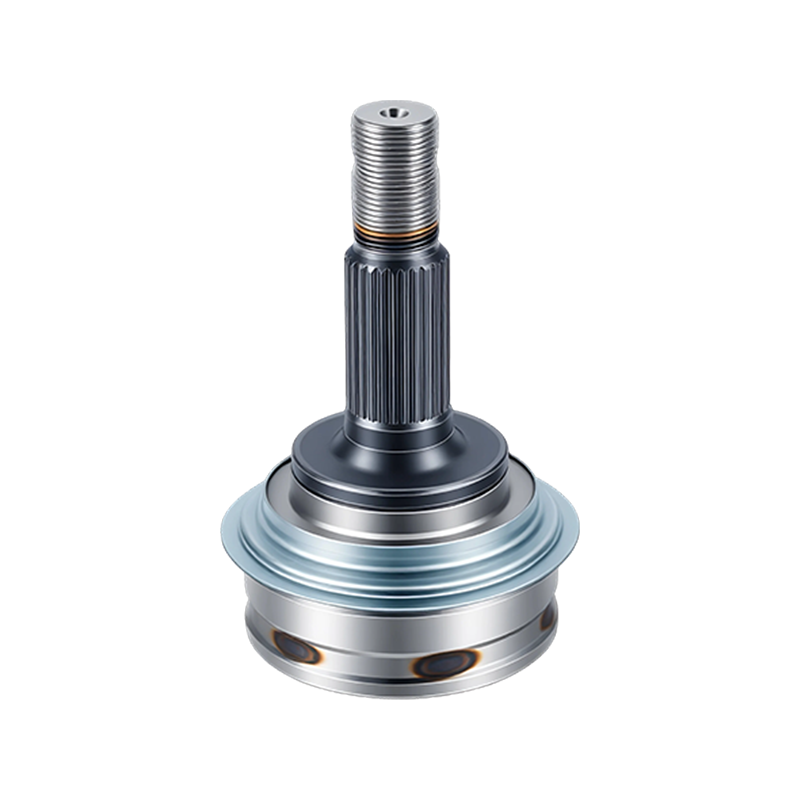
Most outer joints use a Rzeppa design, with steel balls running in curved grooves between an inner race and an outer race. Outer joints are often paired with an ABS tone ring so the wheel-speed sensor can read hub rotation; the replacement part must match the original hub-side configuration precisely.
Because they work at bigger bending angles and sit close to the road, outer joints put more stress on the C.V. boot. A torn outer boot lets water and grit into the joint, and the grease washes out. That contamination causes the familiar clicking noise of a worn outer joint.
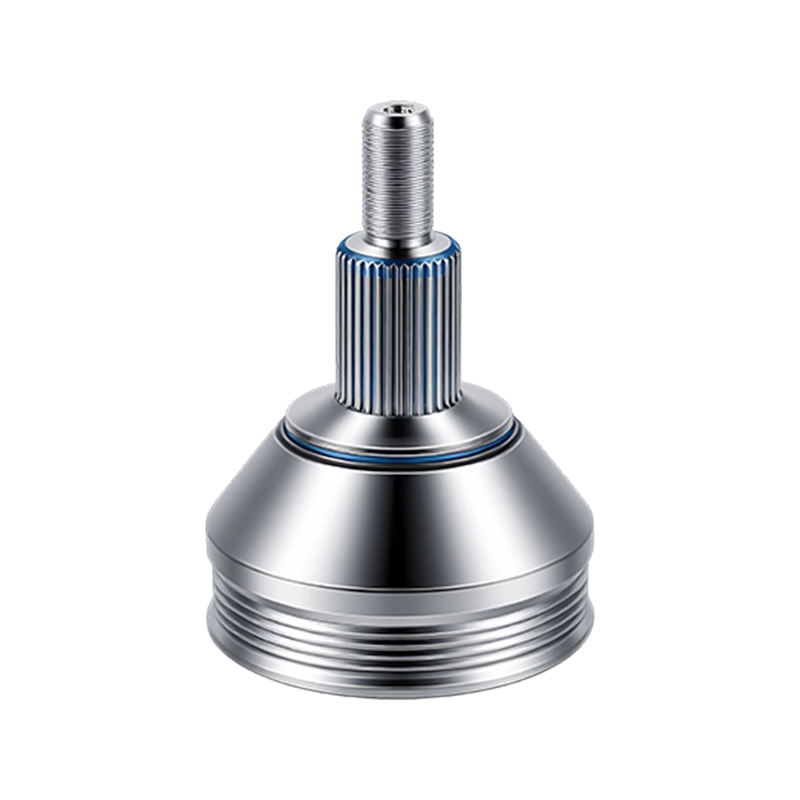
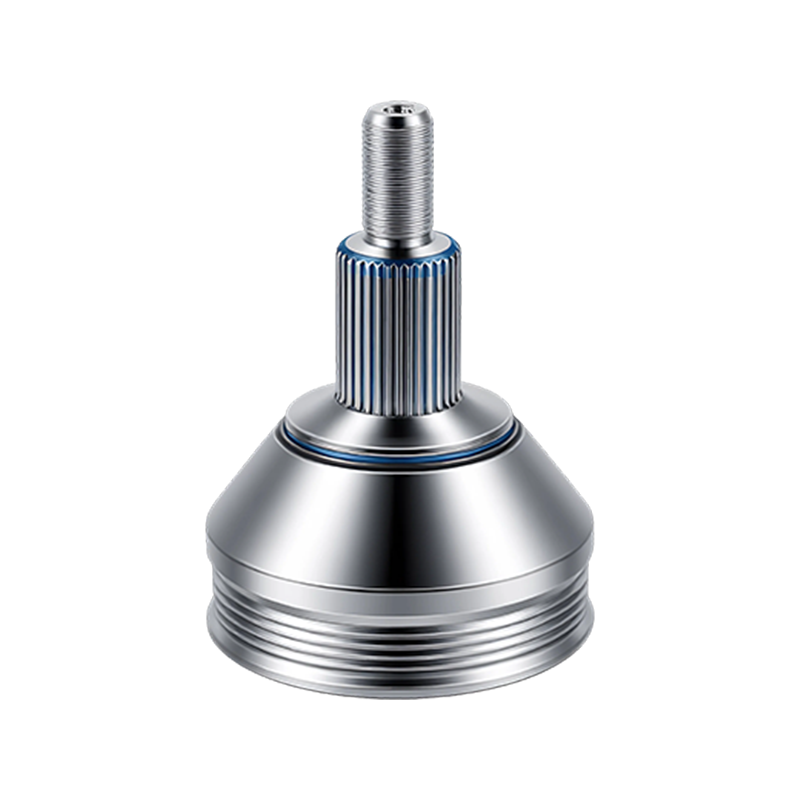 Wear-Resistant Outer CV Joint for Drive ShaftPositioned after a discussion of outer boot failure, this joint is built with reinforced materials and precision ball tracks to resist wear and contamination, supporting reliable steering and power transfer.View Product →
Key Differences Between Inner and Outer C.V. Joints
| Item | Inner C.V. Joint | Outer C.V. Joint |
|---|---|---|
| Position | Transmission or differential side | Wheel hub side |
| Primary motion | Plunging and telescoping | Angular articulation |
| Typical design | Tripod or double-offset | Rzeppa ball-and-cage |
| Main function | Absorbs suspension travel | Handles steering angle |
| Typical failure sign | Vibration under acceleration | Clicking during turns |
These differences explain why the joints fail differently: the outer wears at the ball race from angle and load, while the inner wears at the sliding faces from continuous plunge.
Inner vs. Outer C.V. Joint Failure Symptoms
The key clue is the difference between turning noise and acceleration vibration.
Outer C.V. joint failure — the classic symptom is a rhythmic click-click-click that speeds up with acceleration and becomes loudest when turning. The noise comes from steel balls wearing into the race grooves. It is most noticeable on low-speed turns and usually points to the joint on the outside of the turn.
Inner C.V. joint failure — the typical symptom is a shudder or vibration under straight-line acceleration, especially under heavy load. A worn inner joint can also produce a clunk when shifting gears or when the throttle is applied and released. Because it runs at a shallower angle, the inner joint rarely produces the high-pitched clicking of an outer joint.
Both joints can produce a low-frequency clunk if the axle has excessive play. Any C.V. joint can fail once its boot is torn and grease escapes, so visual inspection is always part of a complete diagnosis.
How to Diagnose Which Joint Is Failing
Use Sound, Feel, and Sight
- Clicking while turning slowly: outer C.V. joint on the loaded side.
- Vibration when accelerating straight: inner C.V. joint.
- Clunking on power application or shift: play in the inner joint or axle splines.
- Torn, cracked, or leaking boot: contamination has reached the joint, and replacement is needed soon.
A visual check of the boots often confirms the diagnosis. Grease sprayed on the underside of the car usually marks the damaged boot. If you grasp the shaft and feel movement when rotating or rocking it, the joint has already developed wear.
For a deeper look at how the two joint types differ internally, read our earlier discussion of what separates an inner C.V. joint from an outer C.V. joint.
Replacement Strategy: Joint or Complete Axle Assembly?
When a C.V. joint fails, you can replace only the joint or the entire drive axle assembly. For aftermarket repairs, the complete axle is often faster and more reliable. The labor to remove and reinstall the axle is the same whether you mount a bare joint or a complete shaft, and a new assembly is pre-greased with fresh boots and matched joints.
A complete assembled drive shaft with inner and outer C.V. joints removes guesswork and lowers the risk of improper installation. Component-level replacement still makes sense when the shaft is in good condition and the boot was damaged early enough to save the joint. You then need a joint with the correct spline, diameter, and rolling-element design.
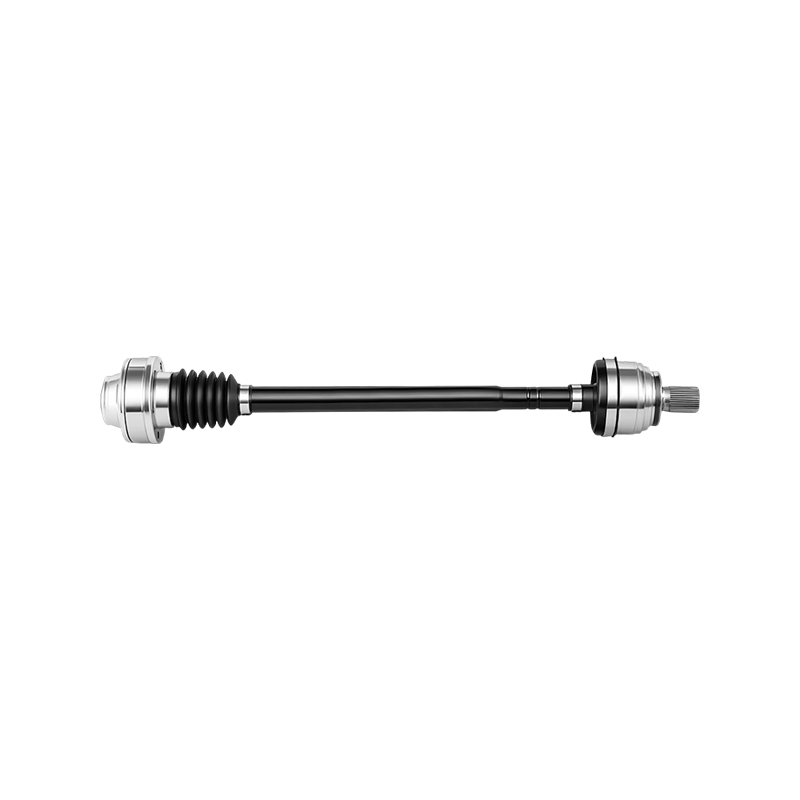
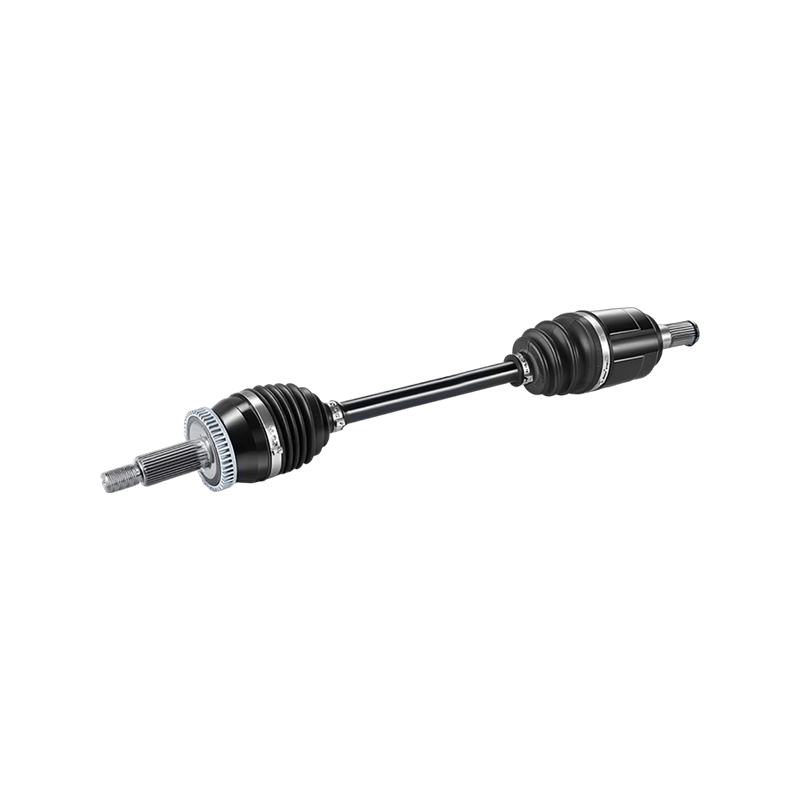 Complete Assembled Drive Shaft with Inner and Outer CV JointsFor those weighing component replacement versus full assembly, this pre-assembled axle includes both CV joints and boots, reducing installation errors and providing a dependable option for lasting repairs.View Product →
Choosing a Reliable Replacement Supplier
For workshop buyers and distributors, the quality of the replacement joint determines how long the repair lasts. Look for a supplier that controls the whole process: raw material selection, heat treatment, CNC machining, grinding of the ball races, and final inspection. Correct hardness, precision-ground surfaces, and a tightly sealed boot decide service life.
A factory-direct manufacturer can provide more consistent quality and traceability than a trading company, and it is easier to request custom packaging, private labeling, or application-specific engineering. When evaluating a new supplier, ask about production capacity, testing procedures, and material certifications. Our production facility is an example of stable in-house quality.
Frequently Asked Questions
Q1: Can I drive with a clicking C.V. joint?
Not for long. Clicking means the joint has lost its smooth bearing surfaces, and wear accelerates quickly. Continued driving can break the joint, leaving the vehicle immobile and possibly damaging the hub or transmission.
Q2: Why do inner C.V. joints fail less often than outer ones?
Inner joints run at smaller angles and are partly shielded from road spray, so their boots last longer. They still wear from plunging friction, and once a torn inner boot lets in grit, the joint fails fast.
Q3: Should I replace both sides at the same time?
Not always. If only one side shows symptoms, replacing that axle assembly is acceptable. On a high-mileage vehicle with both boots cracked, replacing both sides saves labor and reduces the chance of a second failure.
Q4: How long should a C.V. joint last?
With an intact boot and correct grease, a quality C.V. joint can last well over 100,000 miles. Most premature failures are caused by boot damage, not by the joint wearing out.
Conclusion
Knowing the difference between inner and outer C.V. joints turns a confusing clicking noise or an acceleration vibration into an actionable repair plan. Remember: clicking on turns points to the outer joint; vibration under acceleration points to the inner joint. Inspect the boots whenever the vehicle is lifted, and replace damaged joints before they break.
- Email: zyqya@qq.com
- Tel: +86-576-87209702
- Mob: +86-13906546241
- Sales Tel: +86-15098852690/19861808468
- Whatsapp: +86-13656869496
- Add: No. 9 Xingyuan Road, Farm Automobile and Motorcycle Park, Yuhuan City, Zhejiang Province, China
Copyright © Yuhuan Bayzo Machinery Co., Ltd. All Rights Reserved.
OEM/ODM Drivetrain Components Suppliers