
 EN
EN
 English
 Português
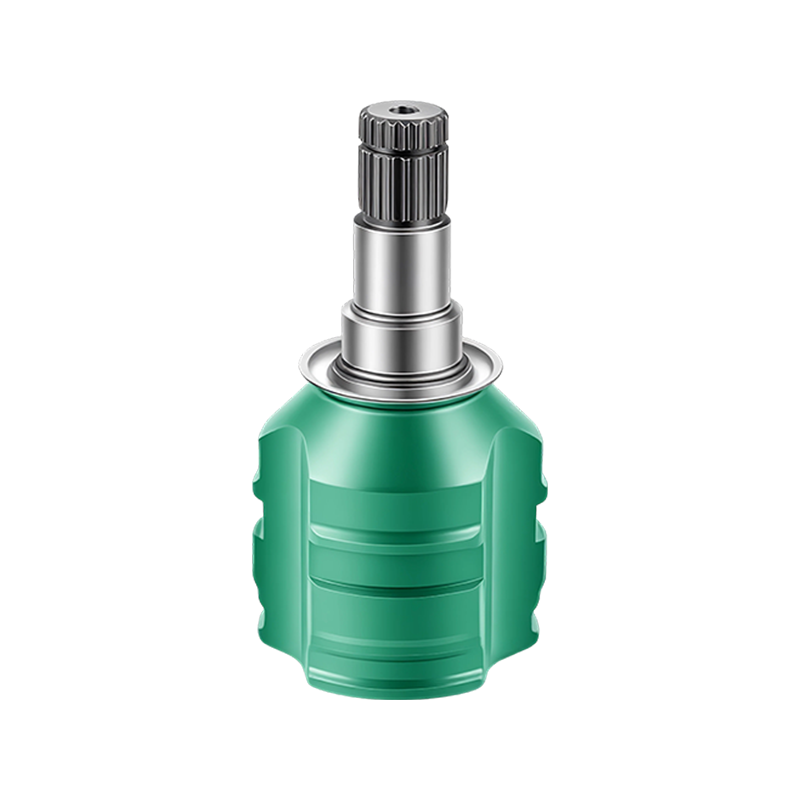



 C.V. Joints Explained: What Is a C.V. Joint and How Does It Drive Power to Wheels?


Yuhuan Bayzo Machinery Co., Ltd. is a professional manufacturer of Constant Velocity Joints and drive shafts, based in Yuhuan, Zhejiang — China's automotive parts manufacturing hub. Our Inner CV Joints range covers inboard joints and inner CV joint assemblies for front-wheel-drive and independent-suspension drivetrains, supplied to aftermarket distributors, rebuilders and private-label programs across Europe, America, the Middle East, Southeast Asia and Africa.
What an Inner C.V. Joint Does in the Drivetrain
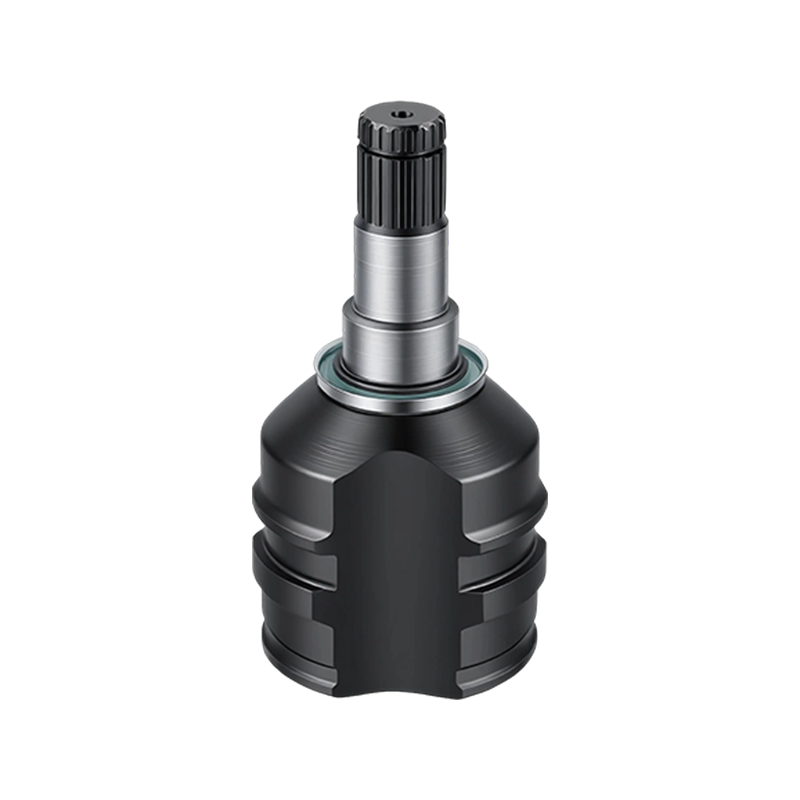
The inner joint connects the transmission or transaxle output to the drive axle shaft. Where the outer joint carries steering articulation, the inner joint transmits torque while providing plunge — axial travel that absorbs the changing distance between the gearbox and the wheel as the suspension compresses and extends.
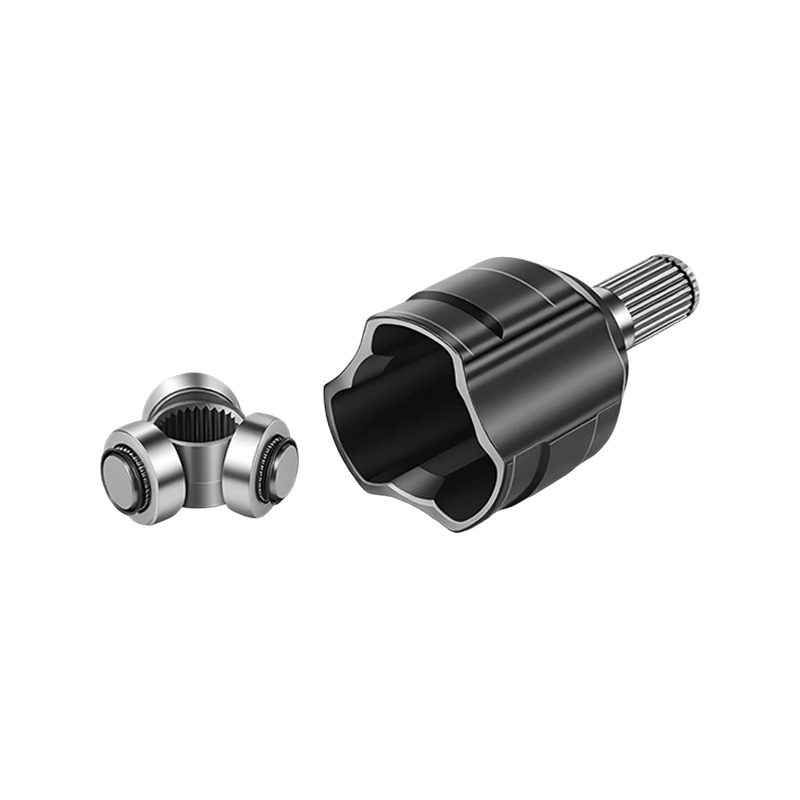
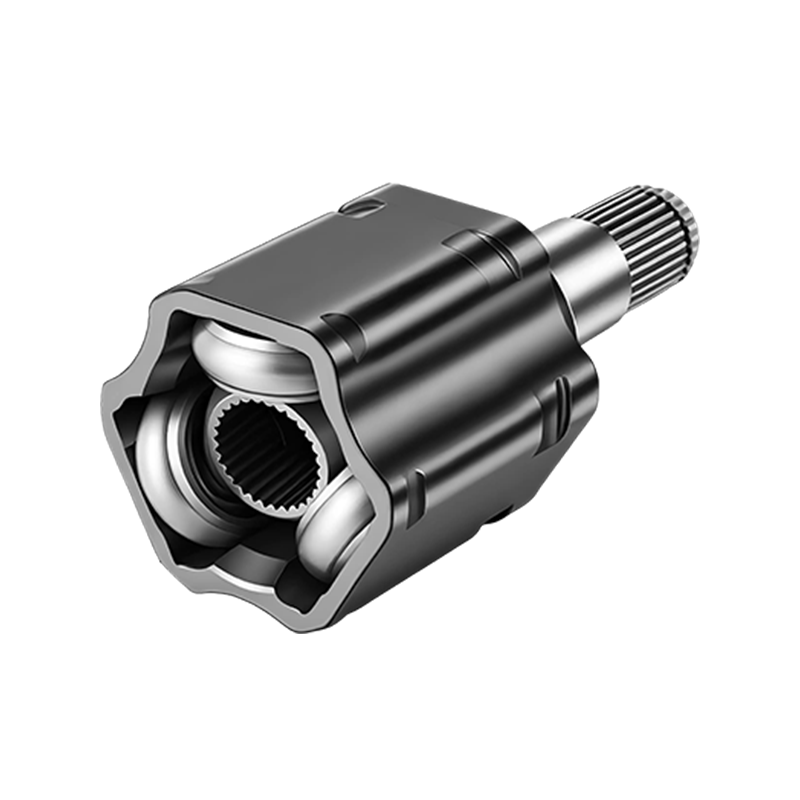
Our inboard joints use tripod and cross-groove raceway designs with optimized geometry. That combination keeps friction low under high torque, damps mechanical vibration and holds noise down so power delivery stays smooth through the full suspension stroke.
Our Inner C.V. Joint Range
We produce inner joints as individual components and as assembled units, matched to OE numbers, customer samples or drawings. The current range includes:
- 43040-32040 Heavy-duty Impact-resistant Inner C.V. Joint — reinforced body and raceways for heavier vehicles and rough-road duty.
- 49582-3S201 Rust-proof & Corrosion-resistant Half Shaft Inner C.V. Joint — treated surfaces for humid, coastal and winter-salt markets.
- 43040-0K010 Low-noise Precision Inner Constant Velocity Joint — tight raceway control for cabin noise and vibration targets.
- Toyota Camry 2012 Tripod Inner CV Joint Assembly — vehicle-specific assembly for direct aftermarket replacement.
- 43040-32040 Tripod Inner C.V. Joint For Car Drive Shaft — tripod configuration for shaft builders and repair lines.
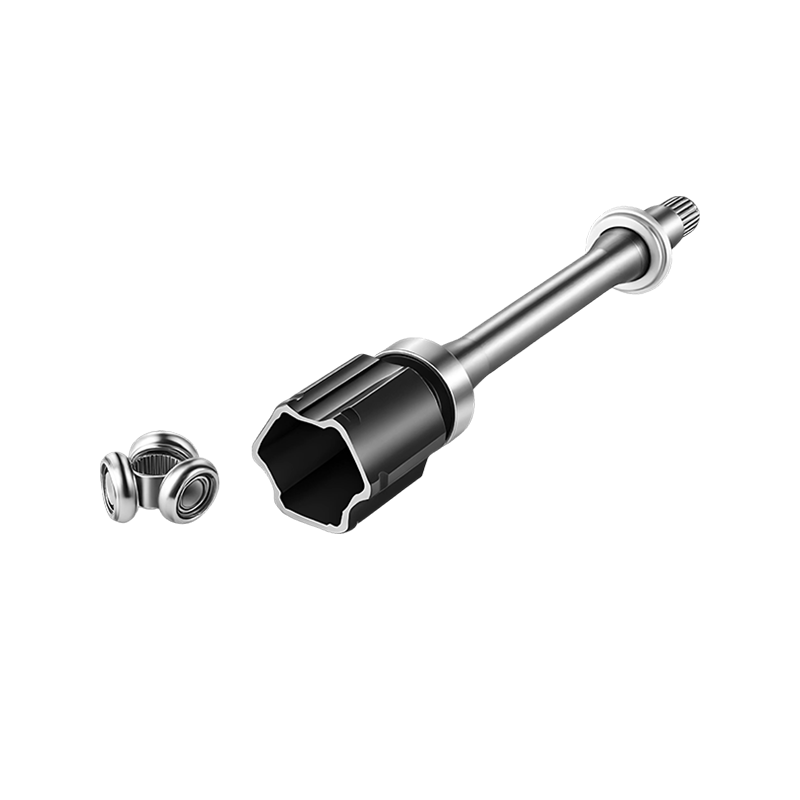
Each item can be supplied as a bare joint or built into a complete half shaft. Related components in our C.V. Joints program include Outer C.V. Joints, Tripod Joints and CV boot kit assemblies, so a single order can cover a full axle rebuild.
Application Fit by Vehicle and Duty
Inner joint selection follows the drivetrain layout, engine torque and the operating environment more than the vehicle badge alone. The table below shows how we match our range to typical aftermarket programs.
| Application | Joint Type | Key Selection Focus | Typical Supply Form |
|---|---|---|---|
| Passenger car FWD, standard duty | Tripod inner joint | Plunge range, spline fit, NVH | Bare joint or half shaft |
| SUV and light commercial | Heavy-duty tripod / cross-groove | Torque capacity, impact resistance | Assembled axle unit |
| Coastal, humid, winter-salt markets | Corrosion-resistant inner joint | Surface treatment, boot sealing | Joint with boot kit |
| Noise-sensitive premium replacement | Low-noise precision joint | Raceway finish, grease fill, clearance | Matched pair with outer joint |
| Rebuilder and shaft-maker supply | OE-numbered inner joint | Spline count, bell OD, snap-ring groove | Bulk, neutral or branded packing |
Materials, Machining and Critical Specifications
Inner joints are machined from alloy steel and heat treated to balance core toughness against raceway hardness. CNC turning, milling and grinding control the dimensions that decide fitment and service life.
- Spline interface — spline count, major diameter, pressure angle and fit class against the gearbox side gear or shaft stub.
- Bell and housing geometry — outer diameter, mounting flange pattern and boot-groove position.
- Raceway form — tripod roller or cross-groove track profile, surface finish and hardness depth.
- Plunge travel — axial stroke available across the suspension range without binding.
- Retention — snap-ring groove, circlip position and end-float control.
- Sealing — boot material, clamp type and grease specification for the target climate.
Configuration Options We Build To
Because aftermarket programs differ in coverage, packaging and price position, we configure each inner joint order around the customer's own requirements rather than a single fixed specification.
- Bare inner joint, joint with boot kit, or fully assembled half shaft.
- OE-number matching, sample-based reverse development or drawing-based production.
- Standard or reinforced heat-treatment route for higher-torque applications.
- Surface treatment selected for the destination market's climate and road-salt exposure.
- Neutral packing, customer brand labeling or custom box design.
Where a program needs a complete axle rather than a joint, we build it through our Complete Drive Shaft Assemblies line, pairing the inner joint with the correct outer joint, shaft and boots.
Quality Control from Raw Material to Shipment
Our quality system follows the part through every stage: incoming material verification, in-process machining checks, assembly control and final inspection before packing. In-house production and inspection capability keep supply stable and repeatable across batches.
- Dimensional checks on splines, bell diameter and groove positions.
- Hardness and surface condition verification on heat-treated parts.
- Fitment and articulation checks on assembled joints and shafts.
- Appearance and packing checks on each shipment before dispatch.
Information We Use to Configure Your Solution
To quote accurately and avoid fitment returns, we work from the following project inputs. Where an OE number is available, it usually shortens the matching process considerably.
| Input | What It Determines |
|---|---|
| OE number, sample or drawing | Base geometry, spline and retention features |
| Vehicle model, year and drivetrain layout | Joint type, plunge range and shaft length |
| Engine torque and duty cycle | Material and heat-treatment route |
| Destination market and climate | Surface treatment and boot specification |
| Supply form and packaging requirement | Assembly scope, labeling and carton design |
| Order volume and delivery schedule | Batch planning and inventory arrangement |
Installation, Maintenance and Serviceability
Inner joints are replaced as part of an axle service. Correct installation depends on clean splines, the right grease quantity, a properly seated boot and correct clamp tension — the points that most often cause premature failure in the field.
- Confirm the joint seats fully on the shaft before fitting the retaining ring.
- Use the specified grease fill; under-filling accelerates raceway wear.
- Check boot seating and clamp position after assembly to prevent grease loss and water ingress.
- Inspect the mating outer joint and shaft splines during the same service.
We supply replacement joints and boot kits as separate service items so workshops and distributors can stock the parts that fail most often without ordering a complete axle.
Working with Bayzo on an Inner Joint Program
Our sales and technical teams handle product matching, sample confirmation and order follow-up directly. Development can start from an OE number, a physical sample or a drawing, and we confirm the specification before batch production begins.
Annual production capacity covers 800,000+ C.V. joints and 300,000+ drive shafts, with exports to 30+ countries and regions. Scaled production and lean scheduling support flexible order timing and repeat supply for established aftermarket lines.
Frequently Asked Questions
Are you a manufacturer or a trading company?
We are a professional manufacturer with in-house production and inspection capability. Our plant is located at No. 9 Xingyuan Road, Farm Automobile and Motorcycle Park, Yuhuan City, Zhejiang Province, China.
Can you develop an inner C.V. joint from a sample or OE number?
Yes. We support development and customization based on customer samples, drawings or OE numbers, and we confirm the matched specification before batch production.
Do you supply inner joints as bare parts or as complete axles?
Both. We supply bare inner joints, joints with boot kits, and fully assembled half shafts where the program requires a complete replacement unit.
Can you provide custom packaging or our own brand?
Yes. We provide packaging solutions, brand labeling and related customization based on customer requirements, including neutral packing for distributors who prefer it.
Which markets do you export to?
Our products are exported to Europe, America, the Middle East, Southeast Asia, Africa, Australia and other regions, serving automotive aftermarket customers.
How do you control quality on inner joint orders?
We apply strict quality control from raw materials, machining and assembly through to packaging and shipment, so each batch delivers stable and reliable performance.