EN
 English
 Português


Industry News
C.V. Joint vs. Universal Joint (U-Joint): Key Differences for Driveshafts
Content
Every driveshaft system must transfer torque while absorbing angles created by suspension travel and steering. Two joint designs dominate modern vehicles: the constant-velocity joint (C.V. joint) and the universal joint (U-joint). Although both connect rotating shafts, their operating principles, limits, and failure patterns are very different. Understanding these differences is essential when inspecting, maintaining, or replacing driveshaft components.
What Is a C.V. Joint?
A constant-velocity joint keeps the output shaft rotating at exactly the same speed as the input shaft, even when the two shafts operate at an angle. Instead of a single hinge point, it transmits torque through several balls rolling in curved grooves or through rollers in a tripod arrangement. As a result, the angular velocity of the driven side remains uniform throughout every revolution.
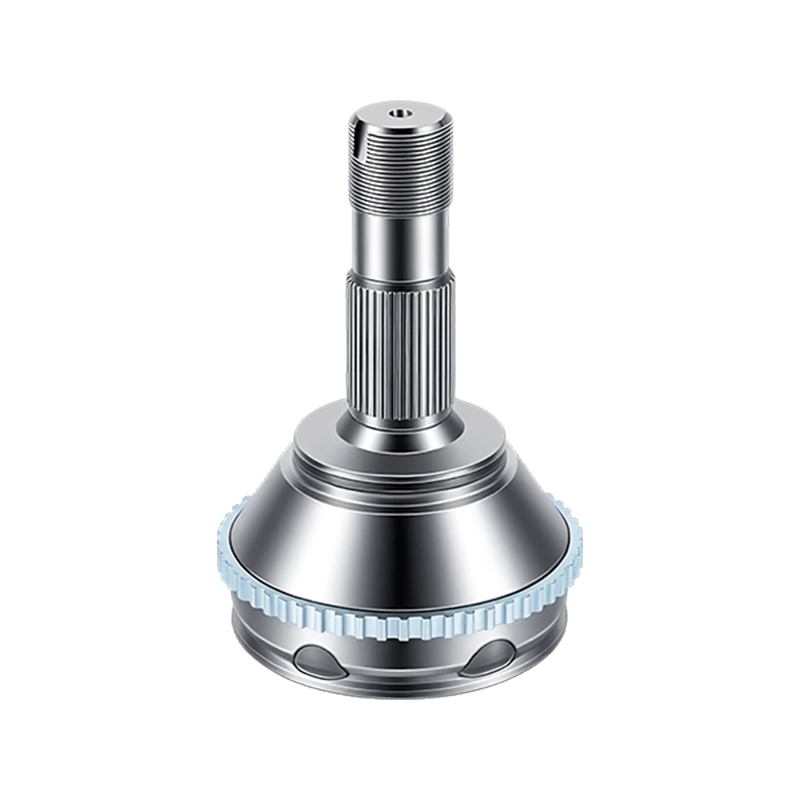
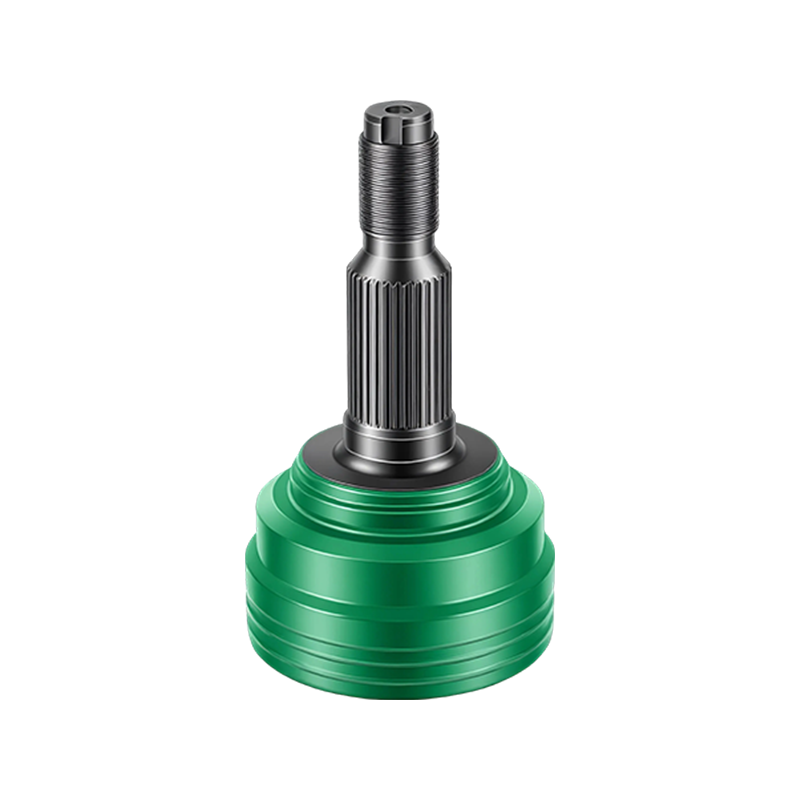
Several designs exist. The Rzeppa-style ball joint is the most common outer joint, mounted behind the wheel hub. A tripod joint, which uses three roller assemblies, is widely used as the inner joint on the transmission side. Both operate smoothly at angles up to about 50 degrees, which is why front-drive axles rely on them.
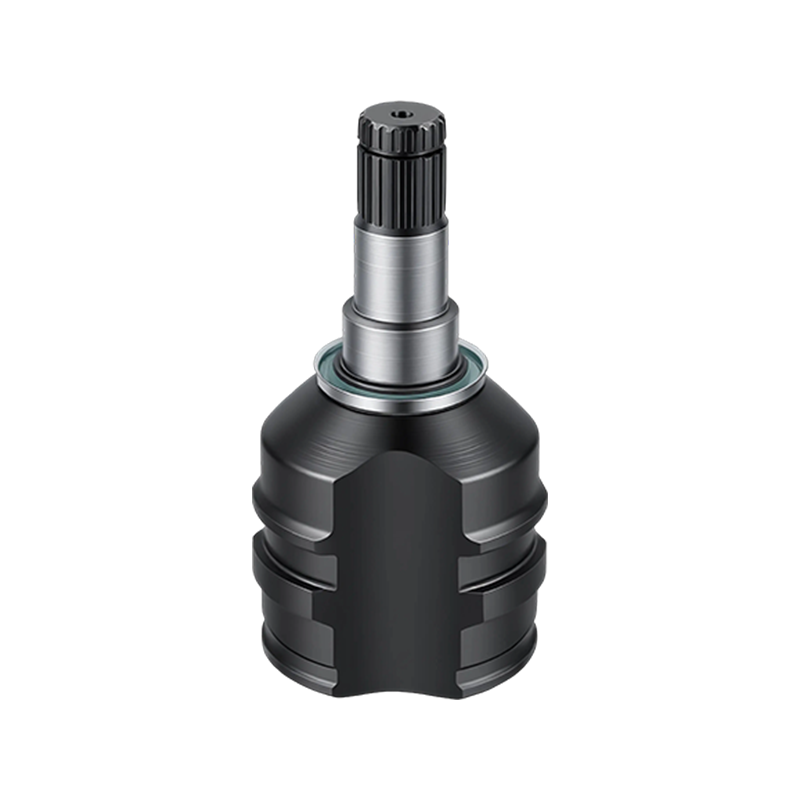
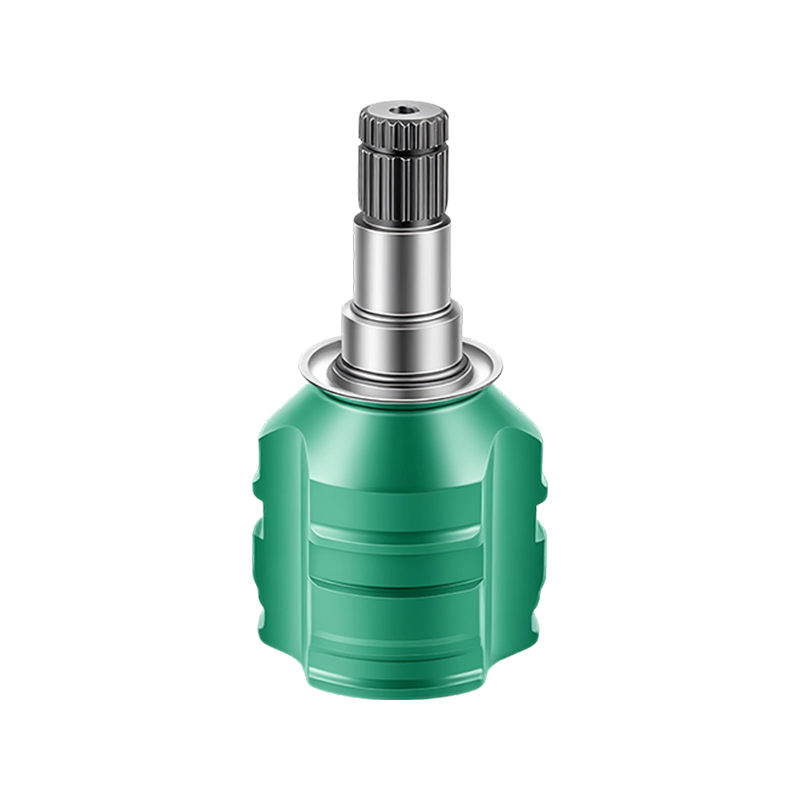 43040-32040 Tripod Inner CV Joint for Drive ShaftThis precision tripod inner joint suits front-drive and selected four-wheel-drive systems. Its roller design compensates axial movement while reducing vibration, making it a reliable replacement for drive shaft repairs.View Product →
The C.V. joint is protected by a flexible boot that keeps grease in and contamination out. A healthy boot lets the joint last the life of the vehicle. Once the boot splits, grease is lost, water and grit enter, and the joint wears rapidly. Regular boot inspection is therefore essential.
What Is a Universal Joint (U-Joint)?
The universal joint, or Cardan joint, uses a cross-shaped spider and needle bearings to connect two yokes. The design is simple, strong, and inexpensive. But a single U-joint operating at an angle does not deliver constant velocity: the output shaft accelerates and decelerates twice per revolution, creating vibration that grows with angle and speed.
At the small angles of a typical rear-wheel-drive propshaft, the fluctuation is mild and easily absorbed. Two U-joints on the same shaft cancel each other's speed errors when they operate at equal but opposite angles, allowing near-constant-velocity behavior.
U-joints handle high torque peaks and impact loads better than most other joint types. They remain the standard for longitudinal driveshafts, solid-axle rear axles, agricultural machines, and power take-off shafts where angles are modest but loads are brutal.
Key Differences Between C.V. Joints and U-Joints
The table below summarizes the most important engineering differences.
| Aspect | C.V. Joint | Universal Joint |
|---|---|---|
| Velocity output | Constant at any angle | Fluctuates twice per revolution when angled |
| Maximum angle | Up to 50 degrees | Up to about 15 to 20 degrees for smooth operation |
| Typical location | Front half shafts, independent suspension | Longitudinal driveshafts, solid axles, PTO shafts |
| Vibration and noise | Low and smooth | Increases with angle and speed |
| Maintenance | Sealed boot; replace if damaged | Greaseable fittings on many units |
| Shock-load tolerance | Good, but boot failure accelerates wear | Excellent; robust against impact |
Velocity Consistency Is the Core Difference
A U-joint's speed fluctuation cannot be eliminated with a single joint. That makes the C.V. joint the only practical option for driven wheels that angle sharply during cornering.
Angle Capacity Decides Where Each Part Belongs
C.V. joints provide smooth power at high operating angles, which suits steered and independently sprung wheels. U-joints handle limited angles but tolerate torque shocks well and are compact for their capacity. The designer matches the joint to the maximum angle the suspension can create.
Different Failure Modes, Different Inspection Habits
With a C.V. joint, failure usually starts with a torn boot, then grease loss and contamination. With a U-joint, failure often shows as clunking from worn needle bearings or a seized spider. Both can be caught early by inspection and regular checks.
Where Each Joint Appears in a Driveshaft System
On a front-wheel-drive vehicle, torque goes from a transverse transaxle to two half shafts. Each half shaft has an inner C.V. joint at the transmission side and an outer C.V. joint at the wheel. The inner joint usually uses a tripod design to allow length change; the outer joint uses a fixed ball design to handle steering angles.
On a rear-wheel-drive vehicle, the torque path runs from the gearbox to a differential through a longitudinal propshaft. Universal joints at both ends accommodate engine movement and suspension travel. Solid-axle rear half shafts may also use U-joints at the inboard ends.
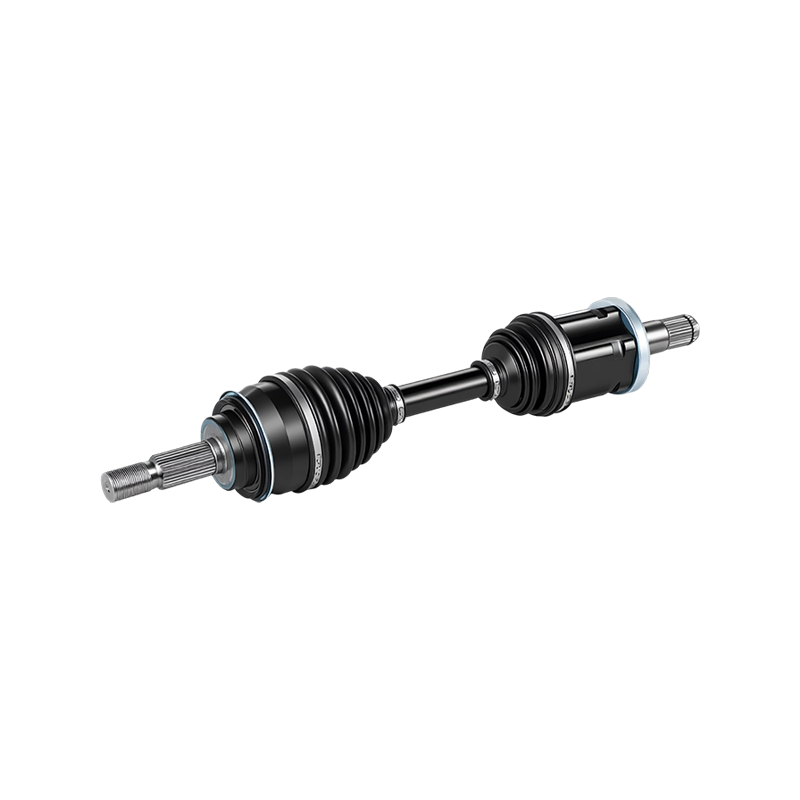
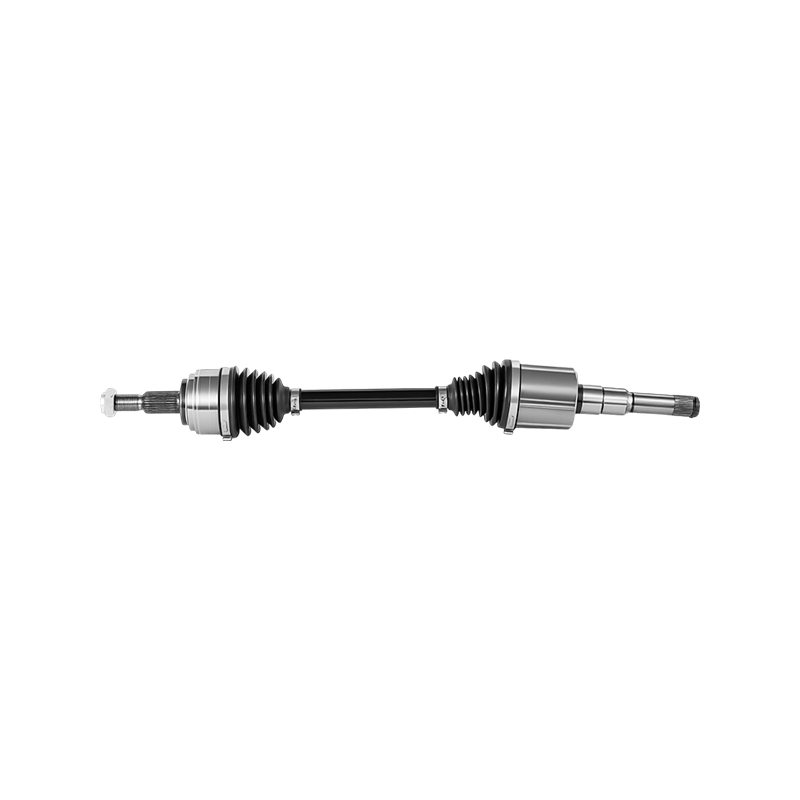
On many all-wheel-drive and independent-suspension models, both families appear in the same vehicle. Complete drive shaft assemblies combine inner and outer C.V. joints with a precision shaft, which is why aftermarket replacement is usually done as a complete assembly rather than joint by joint.
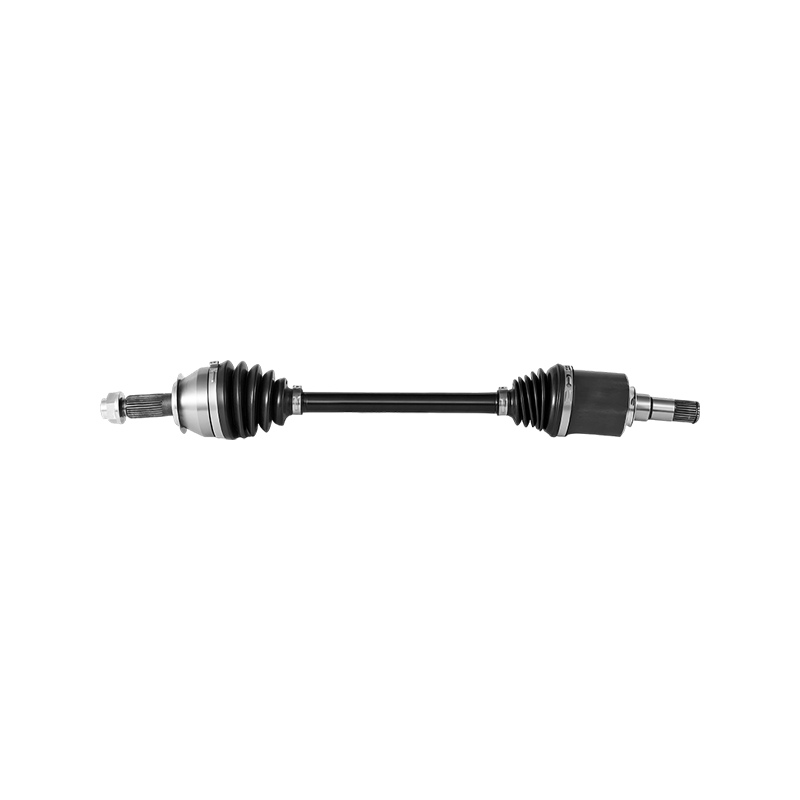 2303102XNM01A Complete CV Axle Drive Shaft AssemblyA full drive axle assembly combining shaft and constant velocity joints for integrated power transfer. Ideal for aftermarket replacement, it improves installation convenience and ensures coordinated performance across steering and suspension movements.View Product →
How to Choose the Right Joint
The first rule is to match the original design. A C.V. joint and a U-joint cannot be swapped on the same shaft because their mounting flanges, yoke types, splines, and length compensation are completely different. Substituting one without redesigning the assembly leads to vibration, early failures, and safety risks.
- Check the OE part number and joint type before ordering.
- Measure the operating angle; large angles demand a C.V. joint, small angles may allow a U-joint.
- Inspect splines, ABS ring, and support bearing before choosing an assembly.
- When a boot is torn, replace the full half shaft assembly to avoid repeat failures.
For workshops and distributors, the supply source matters as much as the part. Working with a supplier that performs factory-direct manufacturing and inspection reduces the risk of mismatched or substandard components.
Common Failure Signs and Maintenance Tips
The earliest signs of a failing C.V. joint are a rhythmic clicking noise while turning and a vibration under acceleration. A cracked or greasy boot is normally visible before the joint is damaged, and replacing a boot kit at that point can save the entire half shaft. Many failures can be predicted if you spot the early warning signs.
U-joint failures are usually announced by a metallic clunk when load direction changes and by growing vibration at highway speed. Worn needle bearings feel rough when the shaft is rotated by hand. Regular greasing extends bearing life on serviceable units.
A practical routine includes checking boots during every oil change, cleaning grease around the boots, listening for clicks on full steering lock, and replacing the boot kit while the joint is still in good condition.
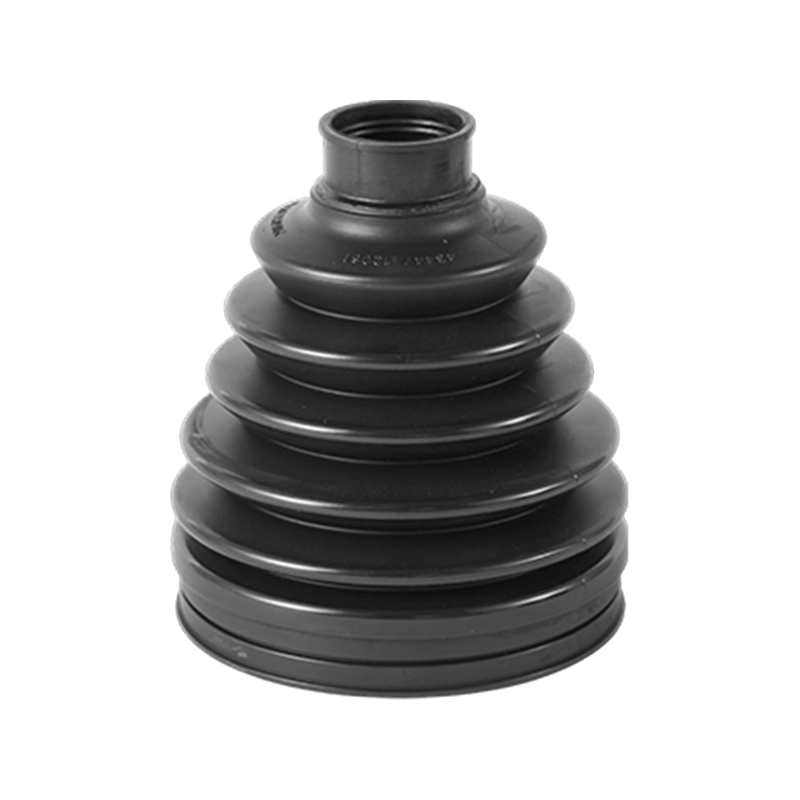 04427-0K020 Anti-Leak Drive Shaft CV Boot CoverThis flexible rubber boot retains grease and blocks contaminants for constant velocity joints. Its pleated design accommodates steering and suspension movement, helping prevent premature joint wear and maintain smooth transmission.View Product →
Frequently Asked Questions
Q1: Can a U-joint replace a C.V. joint on a front-wheel-drive car?
No. The mounting system, splines, angle requirements, and velocity characteristics are incompatible. A U-joint would create severe vibration at steering angles and wear out quickly. Always use the same joint family as the original equipment.
Q2: Why does a U-joint produce vibration that a C.V. joint does not?
A single U-joint changes the angular velocity of the output shaft twice per revolution, and the vibration rises with angle and speed. A C.V. joint keeps output velocity constant, so it runs smoothly even at sharp angles.
Q3: Which joint lasts longer, the C.V. joint or the U-joint?
Both can last more than 150,000 km with correct maintenance. C.V. joint life depends on boot integrity; U-joint life depends on bearing lubrication and load. In aftermarket service, the C.V. joint usually fails first because its boot is exposed to road debris.
Q4: Do I need to replace inner and outer C.V. joints at the same time?
Not always. Many technicians replace the complete half shaft assembly because it includes both joints, the shaft, boots, and grease, reducing the risk of a second failure.
Choosing between a C.V. joint and a U-joint is not about which design is stronger. It is about matching the joint to the motion and load profile of the driveshaft. C.V. joints provide constant velocity at high angles where wheels steer. U-joints deliver simple, robust torque transfer where angles stay conservative. Using the correct joint type and replacing boots early will keep axles turning for hundreds of thousands of miles.
- Email: zyqya@qq.com
- Tel: +86-576-87209702
- Mob: +86-13906546241
- Sales Tel: +86-15098852690/19861808468
- Whatsapp: +86-13656869496
- Add: No. 9 Xingyuan Road, Farm Automobile and Motorcycle Park, Yuhuan City, Zhejiang Province, China
Copyright © Yuhuan Bayzo Machinery Co., Ltd. All Rights Reserved.
OEM/ODM Drivetrain Components Suppliers