EN
 English
 Português


Industry News
What Causes C.V. Joint Clicking Noise When Turning and How to Diagnose It?
Content
- 1 What Is a C.V. Joint and Why Does It Click?
- 2 Main Causes of C.V. Joint Clicking When Turning
- 3 Why the Clicking Noise Is Louder in One Direction
- 4 How to Diagnose C.V. Joint Clicking Noise
- 5 Can You Drive with a Clicking C.V. Joint?
- 6 Repair Options: Boot, Joint, or Complete Axle
- 7 Preventing C.V. Joint Clicking
- 8 Frequently Asked Questions
A clicking or popping sound from the front wheels when turning is one of the most common warning signs in front-wheel-drive vehicles. The noise usually appears at low speed, often during parking or sharp turns. In most cases, the source is a worn constant velocity joint, also called a C.V. joint. Knowing what causes C.V. joint clicking noise when turning, and how to diagnose it correctly, can prevent a minor repair from becoming an expensive drive axle replacement.
This guide explains how C.V. joints work, why they click during turns, how to locate the damaged joint, and when a boot, joint, or complete axle replacement is the best fix.
What Is a C.V. Joint and Why Does It Click?
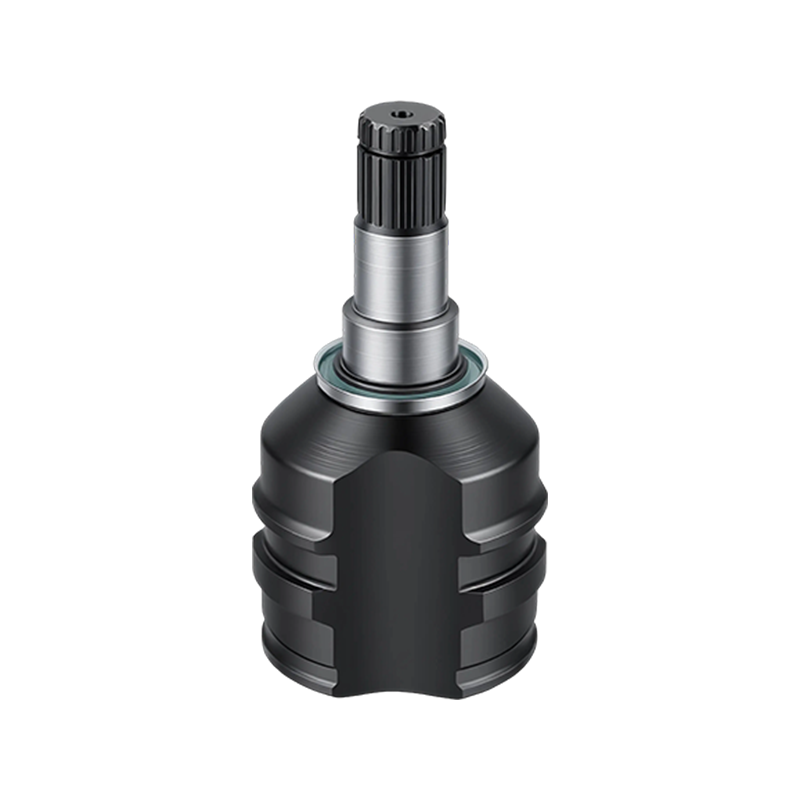
A constant velocity joint transmits engine power from the transmission to the wheels while allowing the drive shaft to flex with suspension movement and steering. A typical front-wheel-drive car uses two joints per shaft: an inner joint at the transmission and an outer joint at the wheel.
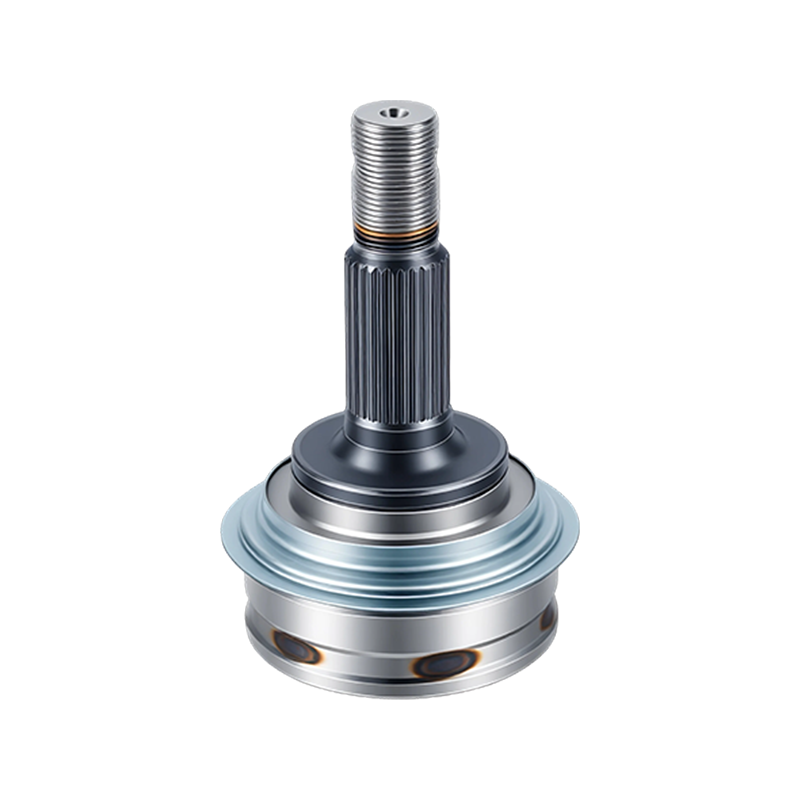
The outer joint is the usual source of clicking. It contains steel balls that roll inside grooved races, protected by a rubber boot filled with grease. Straight driving keeps the joint at a small angle; turning forces it to operate at a much larger angle while still transmitting torque.
When the balls and races wear, the clearance between them increases. The balls begin to slide and catch with each rotation, producing the rhythmic clicking noise that matches wheel speed. High-mileage cars commonly show this wear. Read our guide on why C.V. joints fail early and how to spot the warning signs for a deeper look at the failure process.
Main Causes of C.V. Joint Clicking When Turning
Several conditions cause C.V. joint clicking when turning, and often more than one is present by the time the noise appears.
- Worn outer joint bearing surfaces. This is the most common cause. After high mileage, the balls and grooves lose their fit; the balls shift abruptly during turns and create impact noise.
- Torn or split C.V. boot. The boot keeps grease in and contamination out. Heat, salt and debris crack the rubber. Once a tear appears, grease escapes, dirt enters, and the joint wears quickly.
- Gradual grease loss. A loose clamp or pinhole can let grease escape without obvious damage, causing the joint to run dry.
- Age and total mileage. Every C.V. joint has a finite life; repeated flexing under torque gradually wears the hardened surfaces.
- Severe driving. Full-lock turns, aggressive acceleration, towing, and rough roads accelerate wear.
- Substandard parts. Joints made from low-quality steel or weak heat treatment fail sooner.
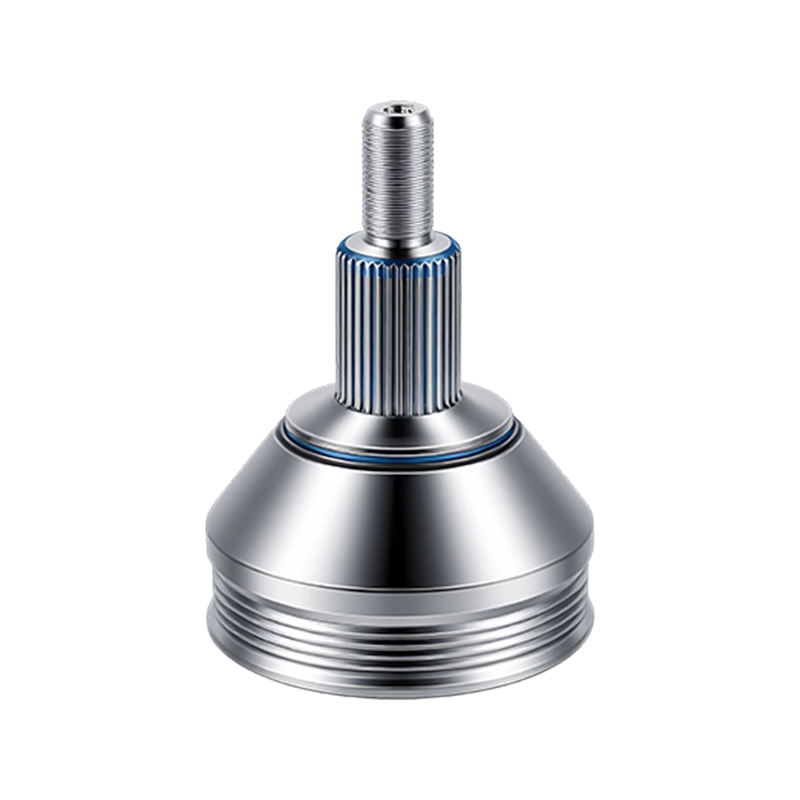
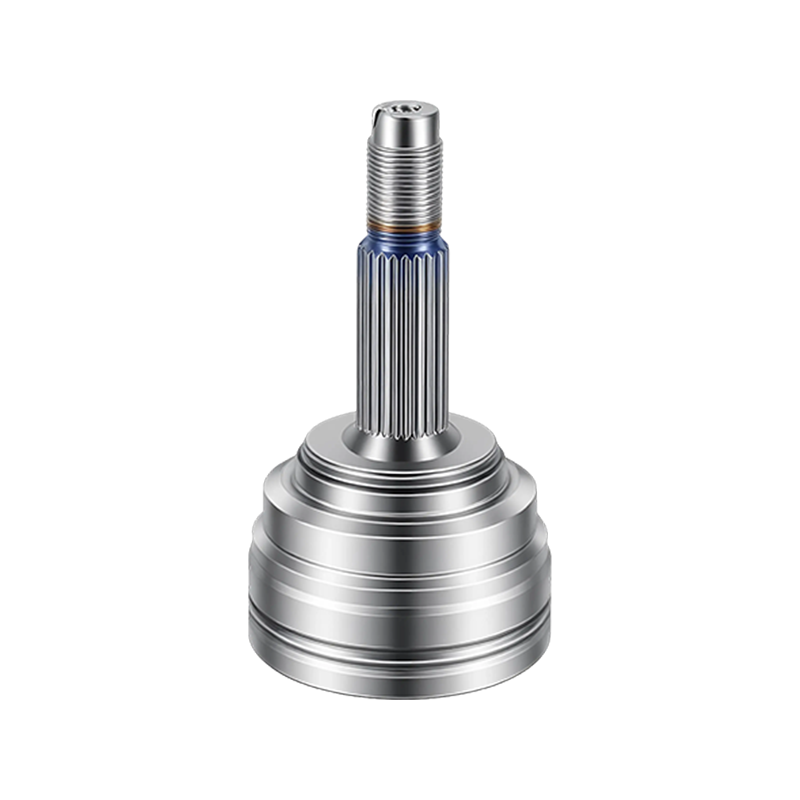
When the noise is confirmed as an outer joint problem, replacing it with a high-quality outer C.V. joint restores quiet operation and protects the drive shaft and hub.
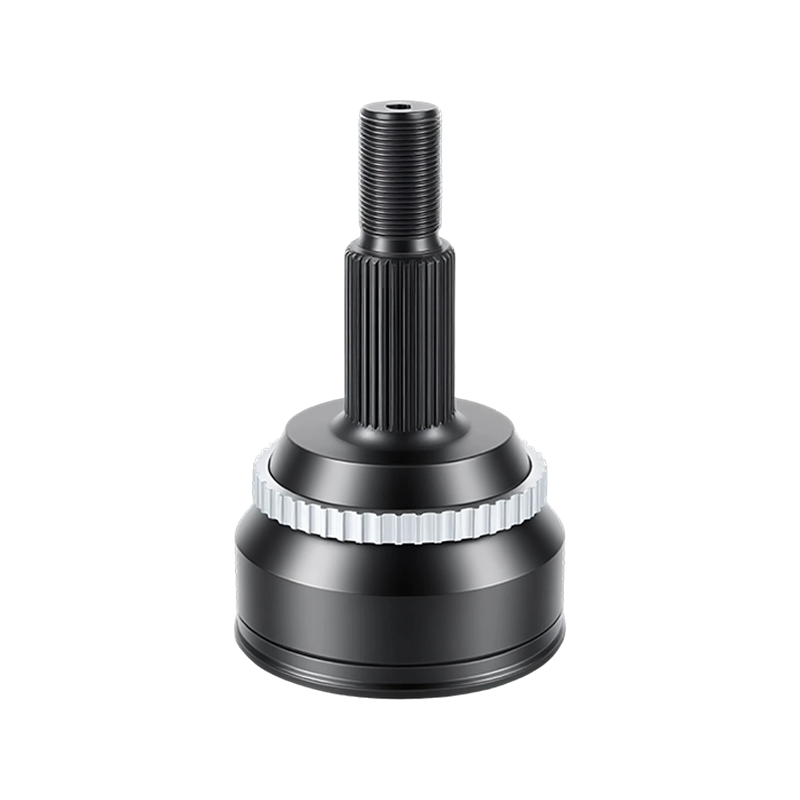 Front Wheel Outer C.V. Joint with ABS RingThis reinforced outer joint with integrated ABS ring is highlighted as a direct fix for clicking noises during turns, restoring quiet operation and protecting the drive shaft hub after outer joint wear is confirmed.View Product →
Why the Clicking Noise Is Louder in One Direction
The direction of the turn gives a strong clue. When you turn left, the right-side outer joint sits on the outside of the arc at a larger angle and under more load. So a worn right joint tends to click during left turns, and a worn left joint clicks during right turns. Noise in both directions means more advanced wear, so both shafts should be inspected.
How to Diagnose C.V. Joint Clicking Noise
A methodical check confirms the source. Follow these steps in order.
- Perform a full-lock circle test. On an empty, flat area, drive slowly in a full-lock circle left, then right. Listen for a rhythmic click that follows wheel speed and note the direction.
- Identify the side. Clicking on left turns points to the right outer joint; clicking on right turns points to the left outer joint.
- Raise the vehicle and inspect the boots for cracks, tears, leaking grease, and loose clamps. Grease splatter around the wheel is a strong sign of a torn boot.
- Check for play by moving the drive shaft in and out and up and down. Excessive movement confirms internal wear.
- Look at the grease. If the boot is sound but the grease is dark or watery, moisture has entered the joint.
- Rule out other parts. Wheel bearing noise hums and changes with speed, not with steering. Brake noise appears when braking; tire noise stays steady. Matching the pattern ensures an accurate diagnosis.
| Symptom | Most Likely Cause |
|---|---|
| Clicking when turning | Worn outer C.V. joint |
| Clunking on acceleration or deceleration | Worn inner C.V. joint or damaged tripod joint |
| Humming that changes with speed | Wheel bearing wear |
| Grease splatter around the wheel area | Torn C.V. boot |
A torn boot is the most preventable cause. If the boot is replaced early with fresh grease and a new clamp, the joint can survive. If it has been exposed to road dirt for a long distance, replacement is unavoidable.
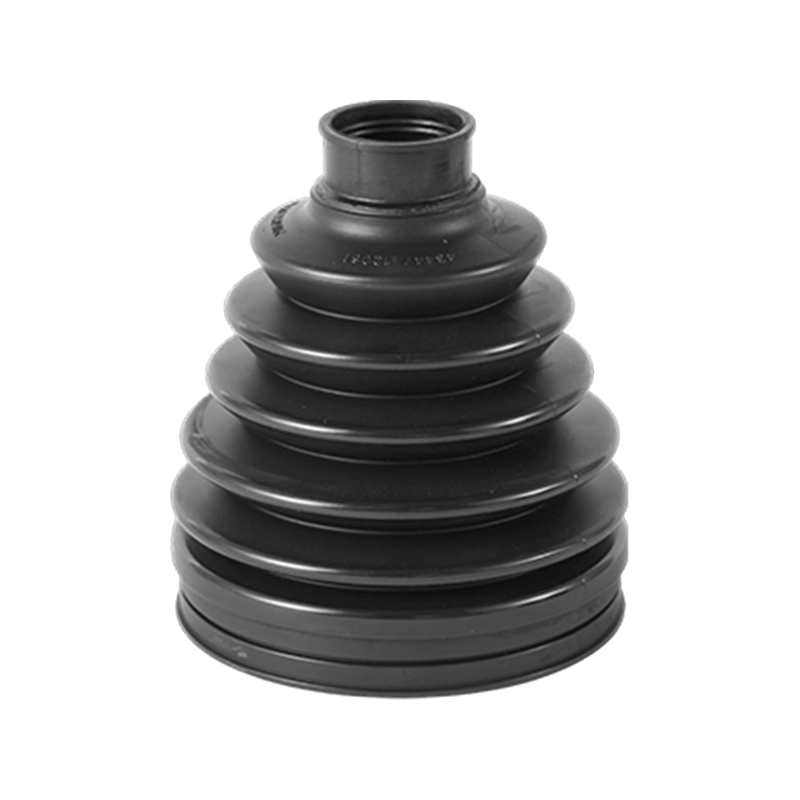 Anti-leak Drive Shaft Ball Cage CV Bellows CoverThis dust boot is presented as a crucial preventive part: if the boot is replaced early with fresh grease and clamps, the C.V. joint can survive before dirt forces a full replacement.View Product →
Can You Drive with a Clicking C.V. Joint?
Driving with a clicking C.V. joint is possible for a short time but never wise. A clicking joint cannot heal; once the bearing surfaces are damaged, wear speeds up with every mile. The noise becomes louder, then turns to grinding or clunking, and eventually the joint can break apart.
If an outer joint separates while moving, the drive shaft can pull out of the hub and the vehicle loses drive instantly. The loose shaft can damage brake lines and wheel well liners. If clicking appears, keep trips short, avoid sharp turns, and book a repair immediately.
Repair Options: Boot, Joint, or Complete Axle
Once the damaged joint is identified, three repair routes are available.
- C.V. boot replacement. Only when the joint is still quiet and the boot has just failed. The shaft is removed, the joint is cleaned, repacked with grease, and sealed with a new boot and clamps. This is prevention, not a cure.
- C.V. joint replacement. When the boot failed and the joint has play but the shaft and opposite joint are sound, replacing only the joint is economical and restores original performance.
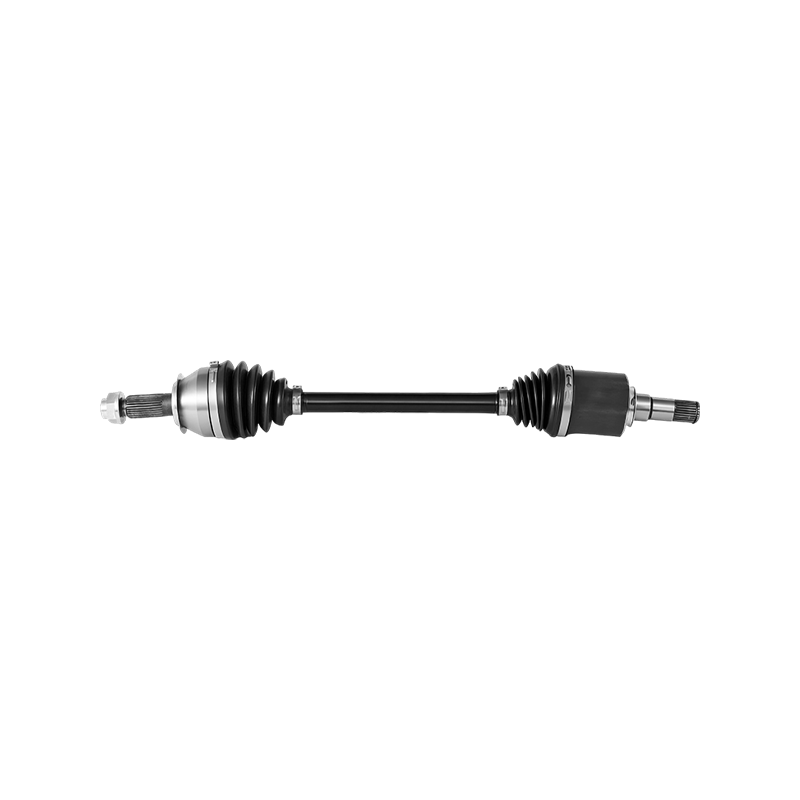
- Complete drive shaft assembly. When both joints are worn, the shaft is damaged, or the mileage is high, a complete axle eliminates guesswork and repeat failure.
A ready-to-install drive shaft assembly includes both joints, boots, grease, and clamps already assembled, shortening shop time and giving a more predictable result. If you are unsure about the correct part, contact our technical team with the vehicle model, year, or original equipment number.
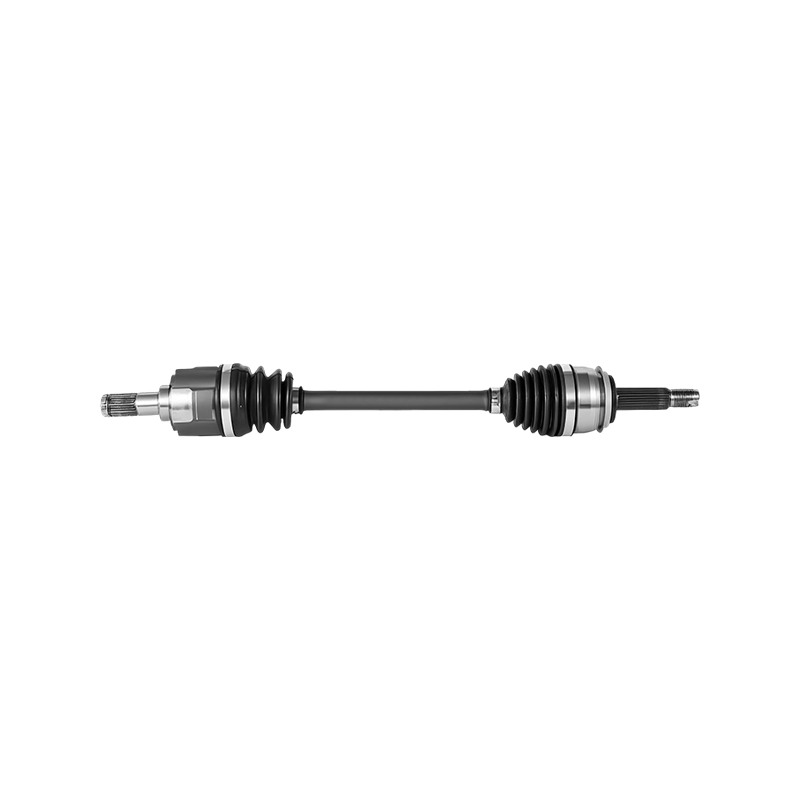 Replacement CV Axle Drive Shaft AssemblyThis ready-to-install half shaft assembly is recommended for predictable repairs, combining both joints, boots, grease, and clamps to shorten shop time and provide a complete front wheel repair solution.View Product →
Preventing C.V. Joint Clicking
Preventing C.V. joint failure is cheaper than repairing it. The most effective measure is regular undercarriage inspection, because the boot protects the joint.
- Check C.V. boots at every oil change or tire rotation.
- Replace cracked or leaking boots immediately.
- Avoid holding full lock during parking.
- Do not accelerate hard while the wheels are sharply turned.
- Fit quality joints and boots from a reliable manufacturer.
These habits matter most for SUVs, trucks, and high-mileage sedans, where drivetrain parts work harder.
Frequently Asked Questions
Q1: Should I always suspect the outer joint?
Not always. The outer joint is the most common source because it works at a wider angle, but a worn inner tripod joint can also click, usually under acceleration. Both joints need inspection.
Q2: How far can I drive with a clicking C.V. joint?
There is no safe distance. Some joints last a few hundred kilometres, others longer, but every kilometre increases wear and repair cost. Replace the joint as early as possible.
Q3: Can a torn boot cause clicking even without visible damage?
Yes. A pinhole or loose clamp can let grease out and moisture in. The joint may start clicking long before the boot shows obvious damage.
Q4: What happens if I ignore the noise?
Wear continues until the ball cage breaks and the joint loses alignment. The shaft can then separate from the hub or transmission, leaving the vehicle stranded and raising the repair cost.
- Email: zyqya@qq.com
- Tel: +86-576-87209702
- Mob: +86-13906546241
- Sales Tel: +86-15098852690/19861808468
- Whatsapp: +86-13656869496
- Add: No. 9 Xingyuan Road, Farm Automobile and Motorcycle Park, Yuhuan City, Zhejiang Province, China
Copyright © Yuhuan Bayzo Machinery Co., Ltd. All Rights Reserved.
OEM/ODM Drivetrain Components Suppliers