EN
 English
 Português


Industry News
Why Do Constant Velocity Joints Fail? Top 5 Root Causes Explained in Detail
Content
- 1 Understanding the CV Joint Assembly
- 2 Top 5 Root Causes of CV Joint Failure
- 3 Common Symptoms of a Failing CV Joint
- 4 How to Prevent Premature CV Joint Failure
- 5 Choose Factory-Quality CV Joints and Drive Shafts
- 6 Frequently Asked Questions About CV Joint Failure
- 7 Final Thoughts: Catch the Problem Early
Constant velocity joints are among the most hard-working components in any front-wheel-drive or all-wheel-drive vehicle. Every turn of the steering wheel, every bump in the road, and every acceleration from a stoplight sends torque through these precision parts at angles that a solid shaft cannot handle. When a CV joint fails, the symptoms can progress from a faint clicking noise to a complete loss of drive power. Knowing the root causes of CV joint failure is the first step to avoiding expensive repairs.
A CV joint transmits power smoothly while the shaft angle changes constantly. When the protective boot tears or the grease loses its properties, contamination attacks the hardened steel raceways and balls, and the joint fails much sooner than it should.
Understanding the CV Joint Assembly
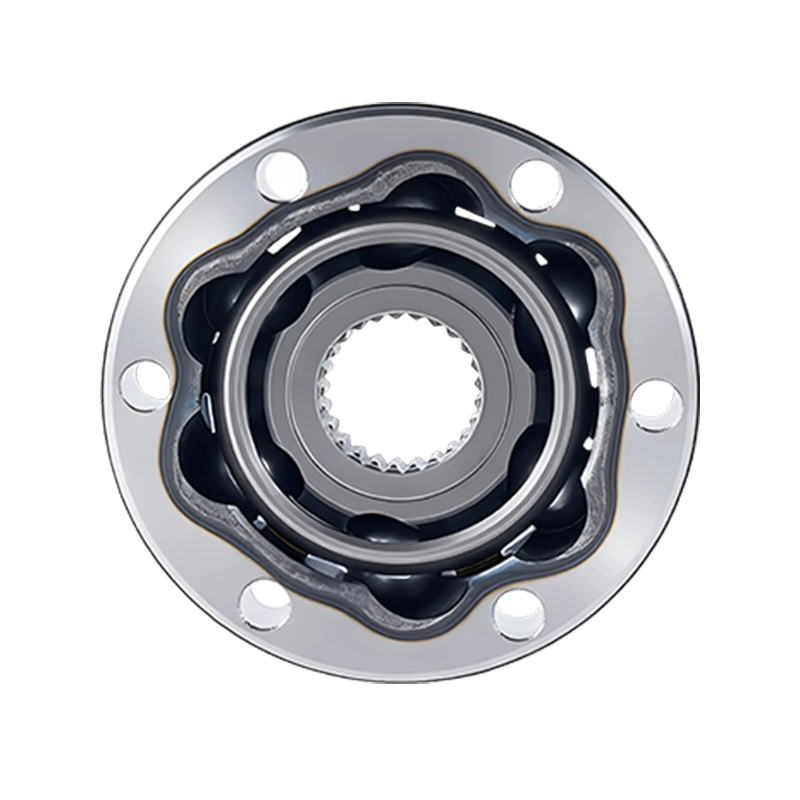
Before looking at failure causes, it helps to understand what is inside a typical constant velocity joint. A CV joint consists of an outer race, an inner race or spider, hardened steel balls or rollers, a cage that holds the balls in position, and a flexible protective boot packed with special grease. This grease keeps friction low and prevents water, road salt, and fine debris from reaching the precision-ground surfaces.
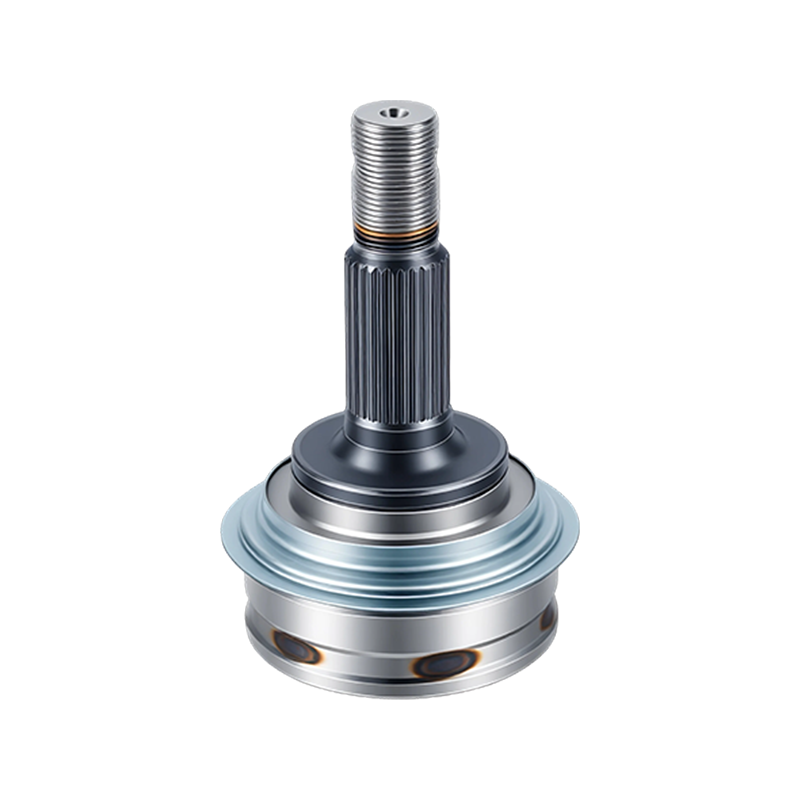
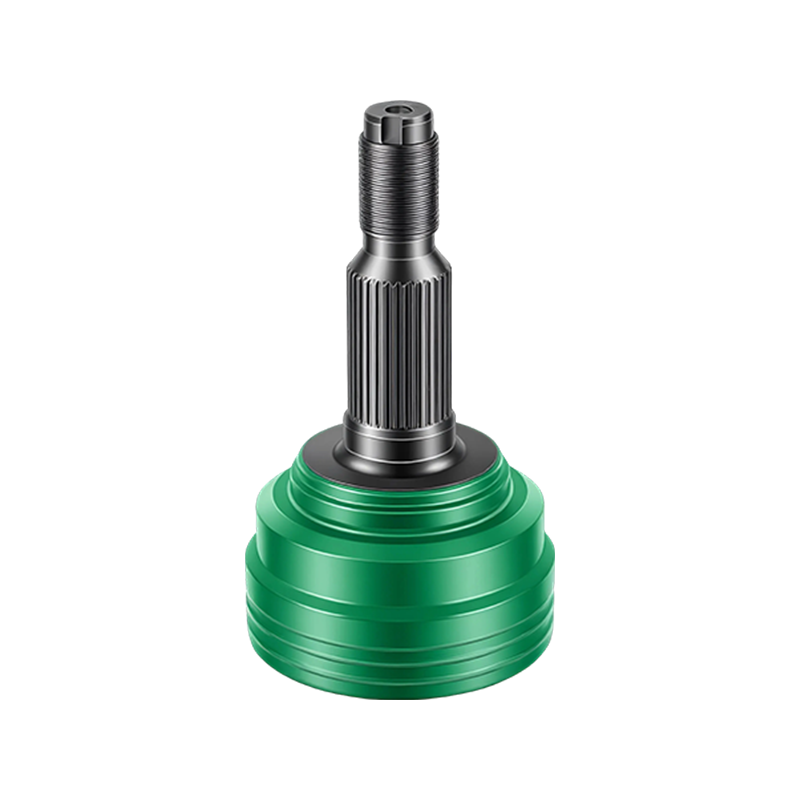
Designs differ between fixed outer joints, plunging tripod joints, and complete drive shaft assemblies, but the failure mechanisms are similar. The five causes below are the ones reported most often by workshop mechanics and aftermarket parts specialists.
Top 5 Root Causes of CV Joint Failure
The five root causes of CV joint failure appear below in the order of frequency seen in real repairs.
- Torn or damaged CV boot
- Grease loss and contamination
- Material fatigue and normal service wear
- Excessive load and extreme operating angles
- Improper installation or axle damage
1. Torn or Damaged CV Boot
The CV boot is the first line of defence and the most common failure point. Boots are made of rubber or thermoplastic that flexes on every steering movement. Over time, exhaust heat, ozone, ultraviolet light, and road grit cause the material to harden and crack.
A small split can spread quickly, especially in cold weather. Grease spins out onto the wheel and underbody, while water and abrasive particles enter the joint. Continuing to drive with a damaged boot will quickly destroy the ball tracks and raceways.
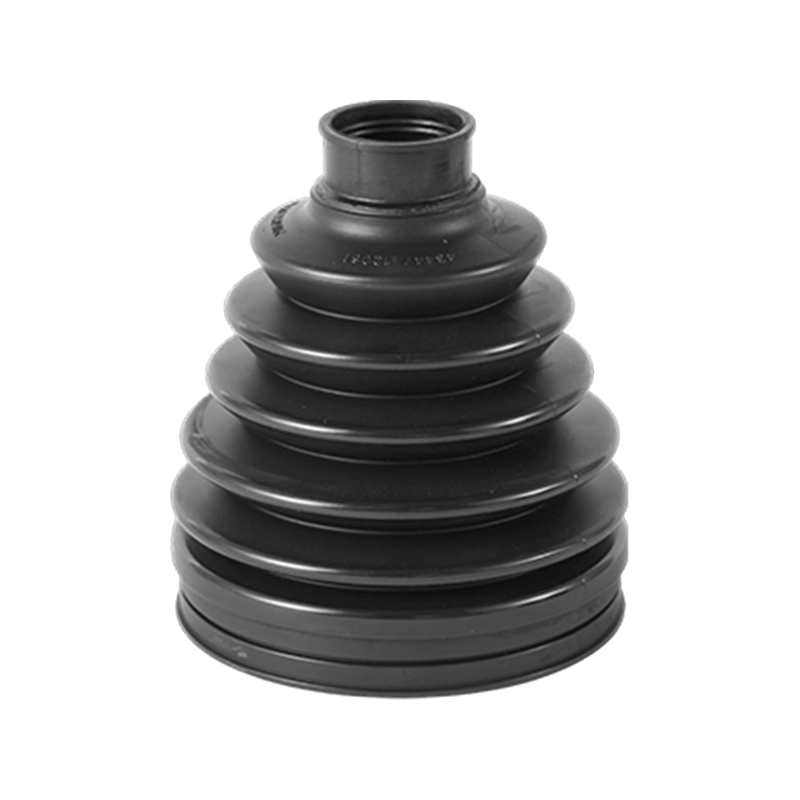 04427-0K020 Anti-Leak CV Boot Cover for Drive ShaftThis rubber boot keeps grease inside the constant velocity joint and blocks dirt and water. It is relevant now because the text warns that damaged boots quickly ruin ball tracks and raceways.View Product →
Prevention tip: Inspect the boots during every oil change and replace a worn or split boot immediately.
2. Grease Loss and Contamination
The grease inside a CV joint does more than lubricate. It protects the hardened steel surfaces from corrosion and acts as a barrier against moisture. If the boot loses its seal, grease slowly escapes and is replaced by road spray and dust.
An incorrectly serviced joint may also be over-greased, under-greased, or filled with the wrong grease. As the lubricating film thins, friction and temperature rise. The grease turns dark and watery, metal particles circulate, and pitting or spalling soon follows.
3. Material Fatigue and Normal Service Wear
Even with an intact boot and clean grease, CV joints do not last forever. The steel balls roll and slide along the hardened tracks millions of times over the life of the vehicle. Eventually micro-cracks appear on the raceways and expand under repeated load, producing the pitting that causes a rhythmic click when turning.
This is normal fatigue, but how quickly it develops depends on steel quality, heat treatment, and workload. City driving with constant turns, stop-and-go traffic, and kerb mounting wears out outer joints faster than highway cruising.
4. Excessive Load and Extreme Operating Angles
Front-wheel-drive cars already use wide joint angles on full steering lock. Lowered or lifted suspension, off-road use, towing, and aggressive launches push the joint beyond its designed range.
Under excessive torque, the cage and raceways can deform or even crack. Plunging inner tripod joints are especially sensitive to sudden torque spikes. Heavy-duty joints with larger balls and stronger cages are a wise choice for these conditions.
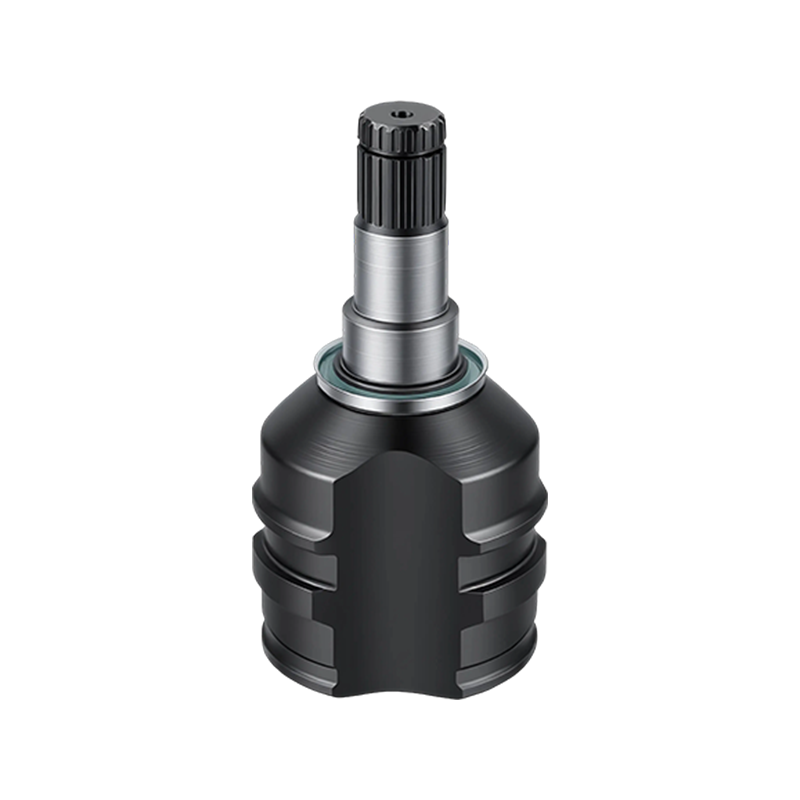 43040-32040 Heavy-Duty Inner CV Joint with Impact ResistanceThis forged steel inner joint handles high torque and axial movement. The preceding text says heavy-duty joints with larger balls and stronger cages are wise for sudden torque spikes, making this part a suitable consideration.View Product →
Driving advice: Avoid full-throttle acceleration with the steering at full lock, and slow down on rough terrain.
5. Improper Installation or Axle Damage
Sometimes the failure starts in the workshop. Over-torquing or under-torquing the hub nut, pressing the joint together incorrectly, using the wrong grease, or fitting a part for a different application can shorten the life of a new CV joint.
A bent drive shaft, a worn wheel bearing, or a damaged hub flange also places abnormal loads on the joint, and an old accident that scuffed the boot can leave a weak point that splits months later.
Installation tip: Always follow torque specifications, use the correct tools, and replace the axle nut once removed.
Common Symptoms of a Failing CV Joint
Early detection gives you the best chance of saving the joint. If you notice any of the symptoms below, book an inspection as soon as possible:
| Symptom | Likely Cause | Recommended Action |
|---|---|---|
| Clicking when turning | Torn boot, worn outer joint | Replace outer joint or axle |
| Vibration at highway speed | Worn inner tripod joint | Inspect inner joint and shaft |
| Grease on wheel or underbody | Torn or split boot | Fit a new boot kit and re-grease |
| Clunking on acceleration | Excess play in joint or spline | Replace drive shaft assembly |
| Knocking over bumps | Damaged cage or severe wear | Replace joint or complete axle |
Clicking when cornering usually means a worn outer joint, while vibration at speed points to the inner tripod joint. The earlier you act, the more money you save. Our guide to early CV joint failure signs explains each symptom in more detail.
How to Prevent Premature CV Joint Failure
Most CV joint failures are preventable with routine attention. These habits extend the life of both the boot and the joint:
- Inspect the boots and axle area at every oil change.
- Replace a cracked or split boot as soon as it is noticed, and refill the joint with fresh approved grease.
- Avoid prolonged driving with the steering wheel at full lock under heavy throttle.
- Slow down on rough roads and avoid impacts against raised kerbs and potholes.
- Listen for early clicking sounds, and use only quality replacement parts that match original specifications.
Choose Factory-Quality CV Joints and Drive Shafts
When a joint is beyond saving, the replacement part determines how long the repair lasts. Cheap unknown brands often use inferior steel and unreliable boots, which is why many workshops source components directly from a dedicated manufacturer.
Yuhuan Bayzo Machinery Co., Ltd., a specialist C.V. joint factory in China, produces inner CV joints, outer CV joints, CV boot kits, and complete drive shaft assemblies for the global aftermarket. Products are made on CNC machines with in-house quality control, and the factory can develop matching parts based on samples, drawings, or OE numbers.
Whether you need a single outer joint, a heavy-duty inner tripod joint, or a complete axle assembly, a professional supplier can provide stable supply and consistent quality.
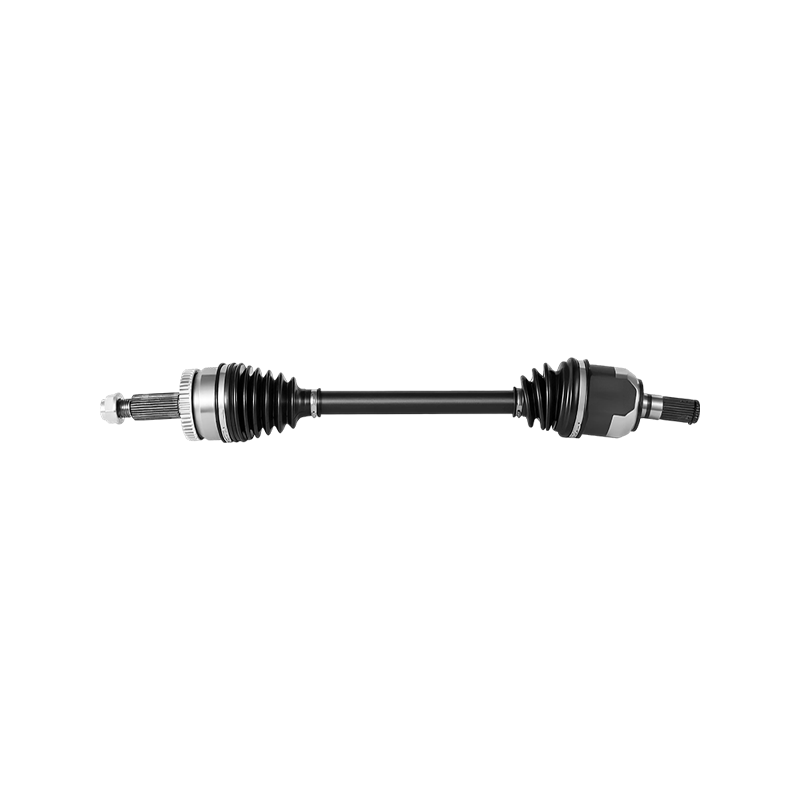
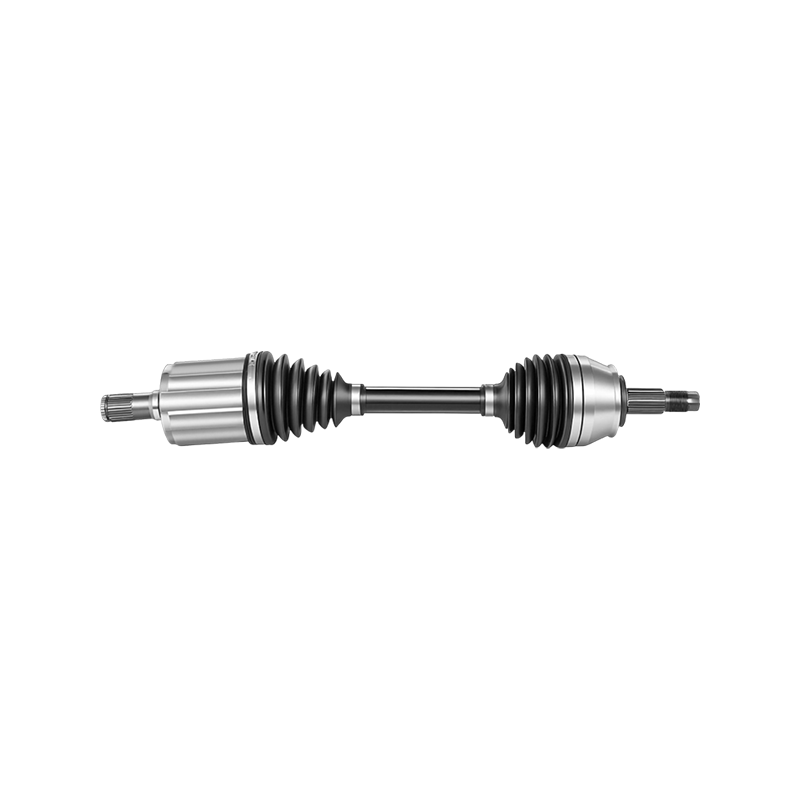
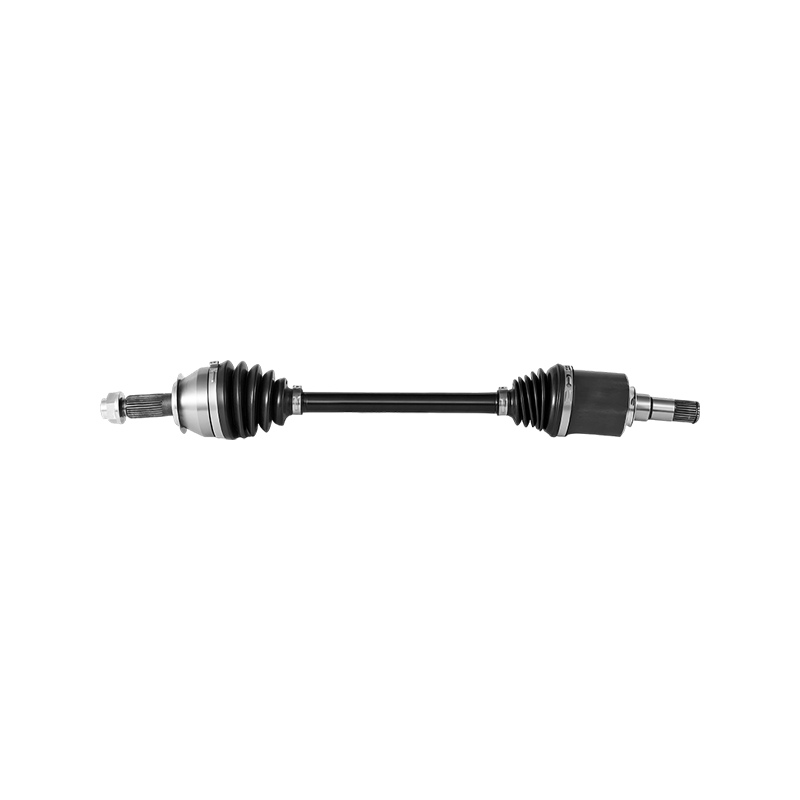 2303102XNM01A Complete CV Axle Drive Shaft AssemblyThis complete assembly integrates the shaft and joints for easier installation and stable power delivery. It appears after advice to browse the product range, so it serves as a direct option for a full axle replacement.View Product →
Browse the C.V. joint product range to find the correct part for your vehicle, or contact the factory with your OE reference.
Frequently Asked Questions About CV Joint Failure
Q1: How long can I drive with a torn CV boot?
You should avoid long journeys with a torn boot. As soon as the boot splits, dirt and water enter the joint and grease escapes. In many cases the joint is damaged beyond repair after only a few thousand kilometres of continued driving.
Q2: Can I replace just the boot instead of the whole joint?
Yes, if the joint is still filled with clean grease and shows no wear or play. Fitting a new CV boot kit is the most economical repair. If the joint already clicks, replace the complete joint or drive shaft assembly.
Q3: What does a bad CV joint sound like?
A worn outer joint makes a rapid clicking noise when turning, most clearly on full lock. A worn inner tripod joint tends to produce a vibration at speed, while excess play creates a clunking sound when torque is applied or released.
Q4: Why do CV joints fail more often on some vehicles?
Driving style, climate, road conditions, and boot material quality all matter. Off-road driving, aggressive acceleration, modified ride height, and extreme heat or cold speed up boot aging and joint wear.
Final Thoughts: Catch the Problem Early
The five root causes of CV joint failure all follow a similar pattern: the protective system fails first, then the precision components inside are exposed to contamination, heat, and abnormal load. Every cause can be managed by inspecting boots, listening for early warning sounds, avoiding extreme conditions, and fitting quality replacement parts from a professional manufacturer.
Check your CV boots today; a few minutes of attention can save you the cost of a complete axle replacement tomorrow.
- Email: zyqya@qq.com
- Tel: +86-576-87209702
- Mob: +86-13906546241
- Sales Tel: +86-15098852690/19861808468
- Whatsapp: +86-13656869496
- Add: No. 9 Xingyuan Road, Farm Automobile and Motorcycle Park, Yuhuan City, Zhejiang Province, China
Copyright © Yuhuan Bayzo Machinery Co., Ltd. All Rights Reserved.
OEM/ODM Drivetrain Components Suppliers